

By JAMES LEONG
SANDAKAN: A groundbreaking photographic anthology, “Vintage Images of North Borneo by the Kwan Brothers 1928-1987”, has emerged as a chronicle of Sandakan’s pre-war prosperity, wartime destruction, and resilient rebirth.
Compiled by local historian Nicholas Tan, the book immortalizes the work of siblings Kwan Kai Fook, Kwan Yau Moi, and Kwan Dick Fook, whose rare images pierce through time to revive the town’s forgotten chapters.
The collection unveils over 100 previously unseen photographs, juxtaposing the town’s vibrant pre-1945 life—ornate shophouses, bustling markets, and sun-dappled streets—with the apocalyptic aftermath of Allied bombings. Stark monochrome frames capture pillars of rubble where thriving communities once stood, transforming historical accounts into visceral experiences.
Sandakan-born historian Nicholas Tan spearheaded the project, dedicating nearly 10 years to tracing the brothers’ scattered archives across Sabah and the UK’s Kew Records.
“These photos are not just images—they’re emotional blueprints of our identity,” Tan stated. His collaboration with global historians and the family of the late Kwan Dick Fook ensured meticulous accuracy, weaving personal narratives into each caption.
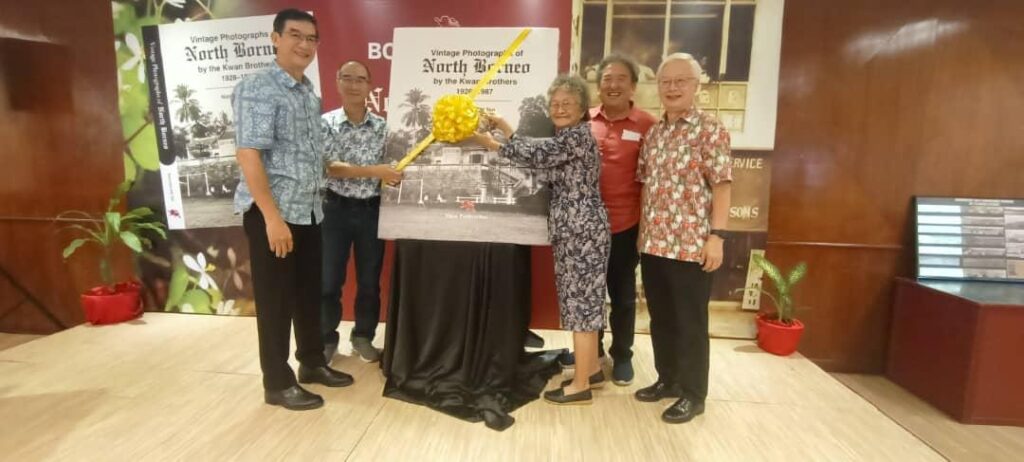
Critical to the book’s authenticity was Madam Wong Chio Chung, 87, widow of Kwan Dick Fook, who safeguarded her husband’s trove of negatives and albums until her collaboration with Tan.
“He’d have wanted these memories to live beyond our family,” she shared at the launch, her voice trembling with pride. Kwan Dick Fook, the last surviving brother, passed on in 2016 at 94, leaving behind a visual epitaph now brought to light.
The book debuted at a Sandakan hotel ceremony officiated by Madam Wong, drawing over 100 guests, including historians, descendants of the Kwan family, and cultural advocates.
Publisher Datuk CL Chan hailed it as “a milestone for Sabahan heritage,” emphasizing its role in anchoring Sandakan’s past within Southeast Asia’s broader wartime narrative.
More than a historical record, the anthology humanises Sandakan’s metamorphosis. A haunting 1944 image of bomb-cratered streets, for instance, sits beside a 1952 snapshot of labourers rebuilding the town’s first post-war market—a testament to endurance.
As Tan notes, “The Kwan brothers didn’t just document history; they etched its soul onto film.”
In a region where oral histories often eclipse tangible records, this work bridges memory and evidence. For descendants of war survivors and scholars alike, the book offers a rare lens into collective trauma and renewal. Plans are underway to digitize the collection for public access, ensuring future generations inherit Sandakan’s unvarnished truth.



-218x150.jpg "《首长与民意党湖七区开斋庆典》28日市区民众大会堂举行")