By WU VUIDE
KUALA LUMPUR: Penampang Member of Parliament, Datuk Ewon Benedick, has urged the Federal Government to abolish the establishment of the Federal Village Development and Security Committees (JKKK) in Sabah, as the state already has its own JKKK Administration Enactment.
He said the move is important to respect Sabah’s state legislation as part of the national reform agenda.
“Penampang fully supports national reform agendas such as the realignment of government subsidies, constitutional amendments to limit the maximum term of the Prime Minister, the establishment of legislation on political party funding, the separation of duties between the Attorney General and the Public Prosecutor, review of outdated laws, and initiatives to digitalise government delivery machinery.
“Penampang believes that this reform agenda must include the interests of Sabah and Sarawak, namely the full implementation of the Malaysia Agreement 1963.
“This includes respecting state legislation related to village administration. Sabah has its own JKKK Administration Enactment, and therefore Penampang urges the Federal Government to abolish the establishment of federal JKKK in Sabah,” he said.
Ewon said this when debating on the motion to table the Agong’s speech during the Parliament sitting.
He said Federal Government intervention in village administration, when Sabah already has its own legislative framework, has raised doubts and dissatisfaction among the people of Sabah.
In this regard, Ewon emphasised that the matter requires clear explanation and feedback from the Federal Government at this time.
“The people of Sabah have delivered a clear message and demand that this issue be given proper attention,” he said.
He also stressed that close relations between the Federal Government and the State Government are indeed important and must be maintained, but they must be carried out while respecting Sabah’s position as a partner in forming Malaysia, in accordance with the Malaysia Agreement 1963 and the mutually agreed terms.
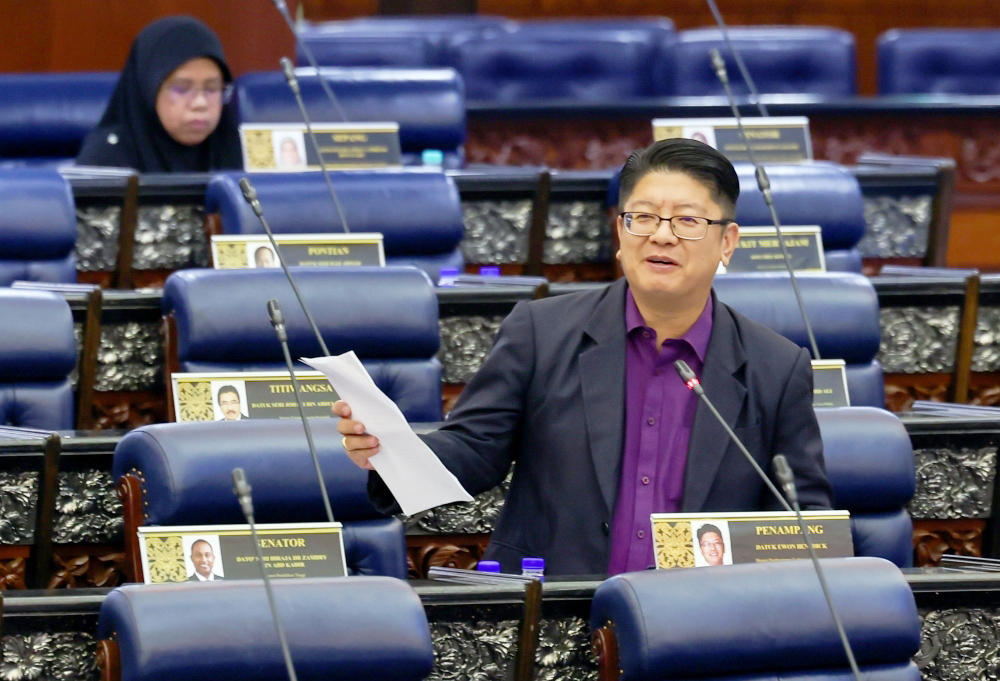
Ewon said the move is important to respect Sabah’s state legislation as part of the national reform agenda.