By WU VUIDE
KOTA KINABALU: Three plantation associations have urged the Sabah Government to review mandatory foreign worker training under e-Lestari and its RM300 per-worker fee.
The Malaysian Palm Oil Association (MPOA) Sabah Branch, East Malaysia Planters’ Association (EMPA) and Malaysian Estate Owners’ Association (MEOA) said they support training that helps foreign workers understand employment requirements, safety and their rights.
But employers already fund induction covering safety, compliance, responsible recruitment, grievance mechanisms and welfare.
The added value of mandatory Sistem Latihan Pekerja Asing (SLPA) has not been shown to justify another recurring RM300 charge.
The issue goes beyond cost. Completing SLPA is now a prerequisite for issuing or renewing the licence to employ non-resident workers.
The sector employs 76,726 registered foreign workers. At RM300 each, one compliance cycle would cost about RM23.02 million. For an employer with 5,000 workers, the bill would be RM1.5 million per cycle.
The figures are illustrative — not all workers are charged at once — but they show the financial exposure of a per-worker, cycle-based model.
They also warned of duplication. Existing programmes already cover safety and health, employment conditions, workplace procedures, rights and responsibilities, conduct and sustainability.
The e-Lestari curriculum covers employment law, safety and health, Sabah culture and customs, communication, discipline, work ethics, social integration and additional skills.
While some modules extend beyond industry training, core areas overlap. The groups want evidence of additional outcomes where employers already have established systems.
They also sought transparency on how the RM300 was set and spent.
Part of it funds local human capital development — TVET, reskilling, upskilling, professional certification, industrial training, and digital and AI initiatives.
The associations support developing Sabah’s workforce but want clarity on how much directly benefits the foreign workers being trained and how much funds broader objectives. The recurring nature of the fee heightens concern.
The three associations called for a review of the framework — its recurring cost, overlap and demonstrable value to employers and workers. They asked that existing employer programmes be recognised where learning outcomes are already met.
The industry remains committed to worker protection, responsible employment, safety and compliance with Sabah labour requirements.
“Our position is not opposition to training, but concern that the framework imposes a recurring cost disproportionate to its benefits,” the associations said.
They called for engagement to develop a more proportionate approach that recognises existing programmes, delivers measurable value and avoids unnecessary regulatory costs.
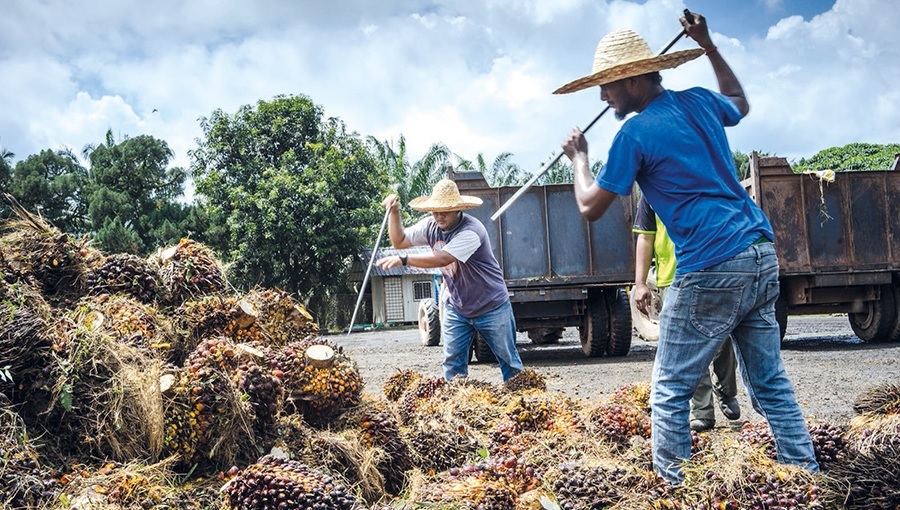
Pic for illustrative purpose only.