By WU VUIDE
KOTA KINABALU: Gabungan Rakyat Sabah (GRS) Wanita chief Datuk Seri Azizah Mohd Dun welcomed the Federal Government’s decision to increase the number of Parliamentary seats for Sabah and Sarawak as a step towards strengthening the representation of the people in the Dewan Rakyat.
She said the additional seats were important to ensure that the voices of the people, particularly those in rural and remote areas, could be brought more effectively to Parliament.
“We welcome what has been announced by the Prime Minister regarding the increase in seats for Sabah and Sarawak.
“My hope is that this can be realised as soon as possible, although we understand that it still requires several procedures, including constitutional amendments and approval by Parliament,” she said.
According to Azizah, the need to increase the number of seats was not merely about the number of elected representatives, but also about ensuring that local issues and needs received more specific attention.
She said this was also closely related to efforts to address poverty in Sabah, which required a more targeted approach based on the circumstances of each area.
“If we do not know a place and the problems faced by its people, how can we plan programmes that are truly suitable to help them?
“We cannot use the same approach for all areas because every district and community has different needs,” she said.
She said elected representatives who truly understood the situation in their respective areas would be able to raise the people’s issues more effectively because they themselves faced the realities of life in the local community.
In a related development, Azizah said the Institute for Development Studies (IDS) Sabah was now placing greater emphasis on poverty studies, including efforts to identify the locations and groups of people affected.
She said the study was not merely looking at poverty by district, but also mapping it down to the village level to identify areas that truly required attention.
“Not all areas in a district are poor. There are certain places with higher poverty rates.
“That is why we are carrying out the mapping so that we can identify more accurately the villages and areas that need intervention,” she said.
She said IDS officers and researchers had visited several districts, including Pitas, Kota Marudu and Semporna, to obtain information directly from district authorities.
She had personally met with the Semporna District Officer to obtain an overview of the locations and poverty issues in the district.
Azizah said the findings of the study would be submitted to the relevant parties, particularly the Sabah Government, while also seeking cooperation from the Federal Government to ensure that measures to address poverty could be implemented more accurately and effectively.
“We want to clearly show the areas that need attention so that government planning and assistance truly reach those in need,” she said.
Meanwhile, Azizah also stressed the importance of giving more opportunities to qualified women and young people from Sabah to come forward as leaders and elected representatives.
“We want more capable women and young people from Sabah to come forward to represent the people in Parliament.
“Be brave to speak up, but make sure that your voice carries truth and the interests of the people, not merely to shout,” said Azizah who is IDS chairman during the media appreciation night at a hotel.
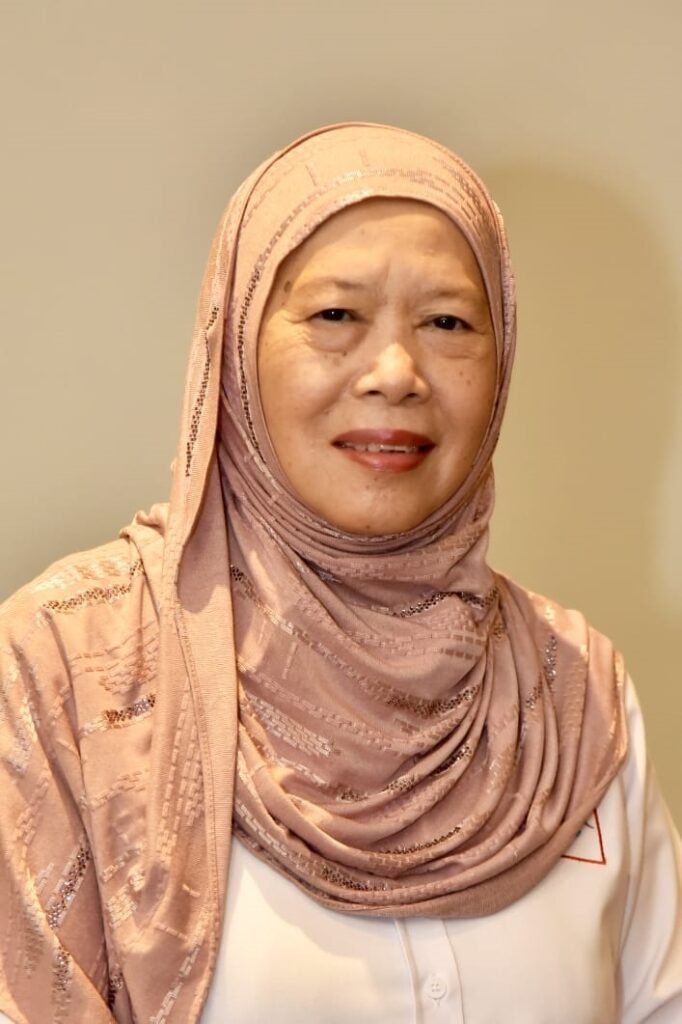
‘My hope is that this can be realised as soon as possible, although we understand that it still requires several procedures, including constitutional amendments and approval by Parliament’ – Azizah