By WU VUIDE
KOTA KINABALU: Researchers must translate complex scientific reports into forms that can be understood by the general public and park management.
This is because scientific communication bridges the gap between discovery and practical application, said Chairman of the Sabah Parks Board of Trustees, Datuk Peter Lintar.
“We must ensure that knowledge from research does not remain locked in laboratories and journal papers but is applied for the benefit of society and decision-makers,” he said during the launch of the Sabah Parks Scientific Research Seminar 2025 at a hotel here yesterday.
He said Sabah Parks aims to become a future centre of excellence in tropical ecosystem research and community conservation education.
“Research conducted in Sabah Parks has the potential to make a significant impact on the management of protected areas, not only at the local level but also globally,” he said.
He reminded everyone that research efforts must align with the organisation’s vision and mission, while also supporting the Sabah Parks Strategic Plan.
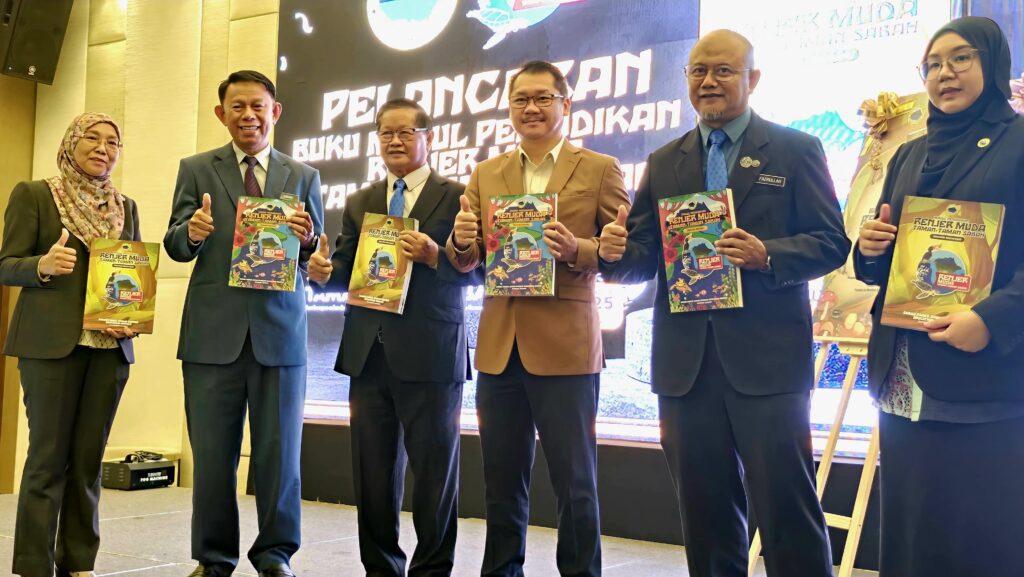
Peter also launched the Sabah Parks Junior Ranger Education Module, an educational document marking the beginning of a transformation. It is an initiative to instil conservation values through a fun and ecosystem-based approach rooted in the local environment.
Sabah Parks Deputy Director, Rimi Repin, said the scientific seminar was first held in 2008.
After 13 years, they have come together again to present research papers by various units from Sabah Parks in this sixth seminar, themed The Contribution of Science and Education in the Management and Protection of Sabah Parks, in alignment with the draft Strategic Plan Goals 2026 to 2036.
Findings from past research have led to recommendations and guidance for improving policies, management and park operations, she said.
For example, she said the recommendation to close several diving areas in Tunku Abdul Rahman Park last year was based on scientific data on coral bleaching incidents, while the eradication of invasive plant species in Kinabalu Park has been carried out over the past two years as part of ecosystem management efforts.
The seminar has five main objectives: to showcase the latest research conducted by Sabah Parks research officers; to encourage the sharing of knowledge and experience among researchers and other divisions; and to raise awareness of the contribution of science in the management and protection of Sabah’s parks.
The other objectives are to serve as a platform for discussion and the formation of future strategies in research and conservation; and to strengthen strategic networks with research institutions, authorities and the local scientific community.
A total of 12 papers from various Sabah Parks divisions will be presented at the seminar, covering topics ranging from environmental science, social science and community, public education, to effective management.