KOTA KINABALU: A new study on the Critically Endangered Sunda pangolin (Manis javanica) has revealed that although pangolins can use oil palm plantations, access to secure sleeping refuges may be an important factor limiting how they use agriculture-dominated landscapes.
Published in Scientific Reports recently, the study followed eight adult wild Sunda pangolins using VHF radio telemetry in the Lower Kinabatangan landscape of Sabah. Researchers recorded more than 1,200 sleeping-site observations, representing over 600 individual sleeping sites across forest and oil palm plantation habitats.
Most of the tracked pangolins used both forest and plantation areas, showing that the species is capable of moving through and using highly modified landscapes. However, when forest was available, pangolins generally used it more frequently for sleeping.
The researchers also found a clear difference in the types of sleeping sites available between habitats. In forests, pangolins used a variety of refuges, including tree hollows, burrows and tree branches with complex structures. In oil palm plantations, sleeping sites were largely restricted to palm crowns.
Sleeping sites in plantations were also less likely to be reused than those in forests, suggesting that although palm crowns can provide temporary refuge, they may not offer the same security and stability as more enclosed sleeping sites.
“Our findings show that simply finding pangolins in an oil palm plantation does not necessarily mean that the plantation provides suitable habitat,” said JiaZhen Lim, the study’s lead author and researcher at Danau Girang Field Centre and The University of Hong Kong. “Pangolins may be able to use these modified landscapes, but they still appear to depend on secure refuge structures that are much more readily available in forests,” he added.
The findings highlight an important consideration for wildlife conservation in agricultural landscapes: habitat use does not necessarily indicate habitat suitability. Animals may continue to use modified areas even when important resources are limited or absent.
Cardiff University’s Professor Benoit Goossens, Director of Danau Girang Field Centre and co-author of the study, said that “understanding where and how pangolins sleep provides an important new perspective on their conservation. Our study shows that protecting forests is not only about preserving feeding areas or movement corridors, but also about maintaining the secure refuges that pangolins need to rest and survive. Our findings should also help guide the management of agricultural landscapes and the selection of suitable sites for pangolin rehabilitation and release.”
“We emphasise that further work involving more individuals, particularly females and different life stages, will be needed to determine whether the same patterns occur across other landscapes and pangolin populations,” concluded Goossens.
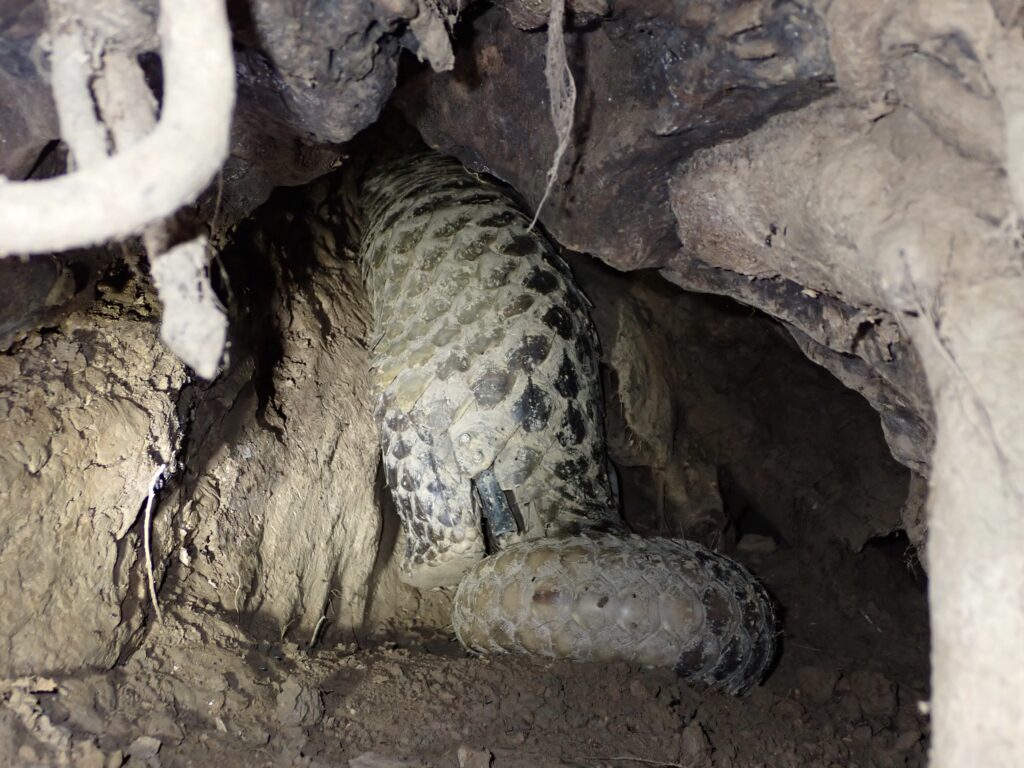
A Sunda pangolin using an enclosed structure in natural forest as a sleeping refuge. – Pic courtesy of JiaZhen Lim
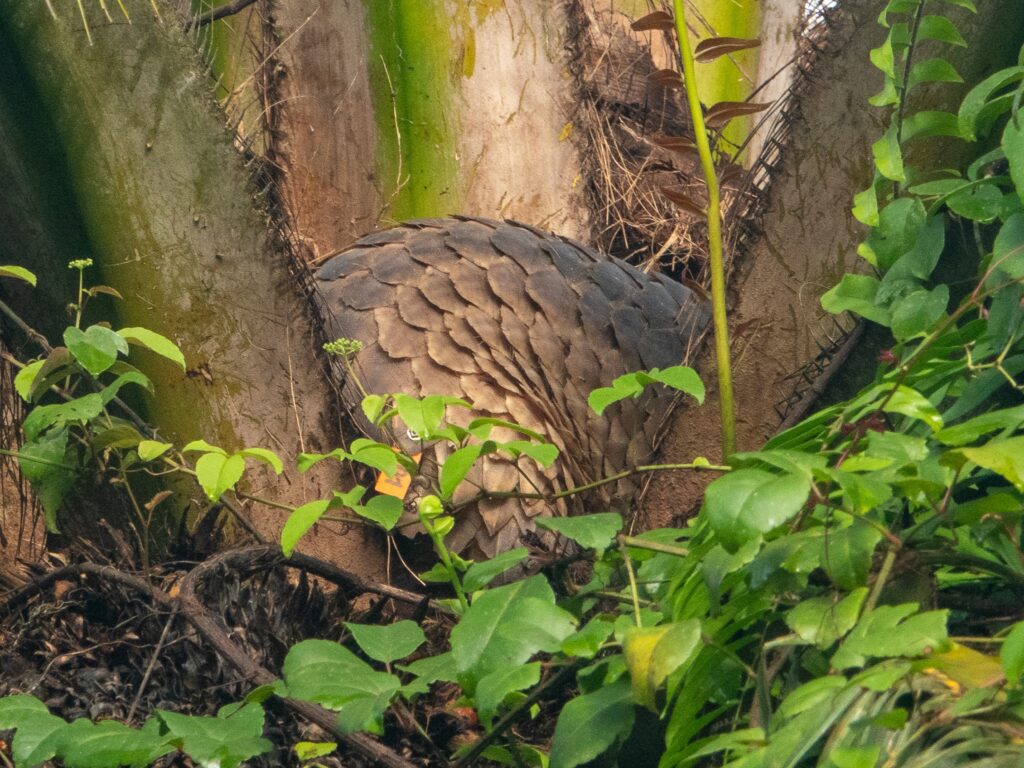
A Sunda pangolin using an oil palm crown as a sleeping site. – Pic courtesy of Harry Cholerton