By WU VUIDE
KOTA KINABALU: Sabah is gearing up to enlist Kiulu into the International Cittaslow network to gain global recognition for sustainable and community-driven tourism.
Assistant Minister to the Chief Minister and Sabah Tourism Board (STB) chairman Datuk Joniston Bangkuai said the international recognition would elevate Kiulu’s rural tourism profile and position Sabah as a model for community-based tourism.
“Kiulu already has strong community-based tourism. Cittaslow helps us organise these strengths into a recognised standard, improve consistency, and create stronger market confidence for visitors and operators alike.
“This initiative will also benefit Sabah and Malaysia by promoting sustainable tourism, creating economic opportunities, and showcasing our culture, local agriculture and natural heritage to international visitors,” he said.
Joniston was speaking after meeting representatives from the Malaysia Talent Education and Industry–Academia Collaboration Association (M-TEIA), led by Pang Thou Chong; Kiulu Tourism Association president Meijin Manggingow, and a delegation from Taiwan’s Nanhua University led by Assistant Professor Liang Yi-Tsung.
The Nanhua University delegation is visiting Kiulu from January 10 to 19 to conduct courses as part of broader efforts to strengthen Malaysia’s first International Cittaslow certification.
Under the partnership, Nanhua University’s Department of Tourism Management has deployed lecturers and students to work directly with the Kiulu community through workshops, demonstrations and on-site engagements.
The initiatives include assisting rural tourism operators in developing value-added culinary products using local produce such as cassava, bananas, sweet potatoes and citrus fruits, enhancing product quality and the overall visitor experience in line with Cittaslow values.
Joniston, who is Kiulu assemblyman, said the Cittaslow framework provides a clear structure for improving product quality, visitor management and community participation.
He added that the involvement of universities with proven experience helps accelerate local readiness through practical, on-the-ground implementation.
Nanhua University is recognised as a Friend of Cittaslow International and has extensive experience guiding communities in Taiwan through the International Cittaslow framework by integrating slow living, slow food and community-based economic models.
“From our assessment, Kiulu is already well aligned with most of the guidelines and will need to focus on strengthening consistency and documentation to support certification,” Liang said.
He added that the efforts should also emphasise sustainability and community economic empowerment through agriculture, nature-based and cultural activities.
Last year, M-TEIA proposed Kiulu for inclusion in the International Cittaslow network and linked STB’s community-based tourism initiatives with Taiwan’s Cittaslow Alliance.
M-TEIA and STB also co-organised an international exchange seminar in Kiulu in August last year, fostering knowledge sharing and strengthening ties with Nanhua University.
Following this, the Kiulu Tourism Association partnered with Nanhua University to launch a three-year training programme for 15 farmers, focusing on pineapple cultivation, product processing and agrotourism development.

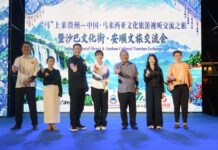
Joniston with Pang (5th right), Meijin (5th left), and Liang (2nd right).