By KONG
LABUAN: A separate Federal Territory of Malaysia located near the state of Sabah on Borneo, Labuan is seriously committed to attracting Russian tourists. As for Sabah, it is already gaining popularity rapidly, with tourist arrivals from Russia on the rise. Here is an overview of the islands’ plans for the Russian market in 2026.
Over the past three to five years, Tourism Malaysia has made a major leap forward in strengthening its position on the Russian travel market.
Inspired by the success of Kuala Lumpur and Langkawi, the country’s lesser-known regions are now stepping up their promotion in Russia.
Labuan dreams of charter flights from Russia and is preparing Russian-speaking guides.
In 2025, Labuan welcomed around 100 Russian tourists, compared with 150 a year earlier. At the same time, the island received a total of 1.2 million visitors last year, Jerry Teo, a representative of the Malaysia BIMP-EAGA Business Council Country Head Of Tourism Cluster, told the ATOR correspondent during the MITT exhibition currently taking place in Moscow.
According to Teo, limited demand from Russian tourists is not a reason for disappointment, but rather a reason to act — especially now, when demand for unique travel experiences is growing worldwide. And that is exactly what Labuan can offer.
The island has everything Russian travellers tend to appreciate: pristine beaches, a rich underwater world, delicious food, quality hotels, and authenticity, including water villages and traditional crafts. On top of that, Labuan is a duty-free island, which will certainly appeal to shopping enthusiasts.
Equally important, Teo says, is the island’s convenient logistics since Labuan has an international airport facility.
For example, in April, it is possible to travel there from Russia (Moscow) for around RUB130,000 per person round trip. The journey involves two connections — in China and Kuala Lumpur. Fares with a connection in the UAE are lower — RUB76,400 per person round trip — although this option is currently unavailable.
In the longer term, according to Teo, the island’s authorities are hoping for charter flights from Russia.
“I know it sounds very ambitious. But we are not ruling out such a possibility. We are making plans and will work towards turning them into reality,” Teo said.
To attract Russian tourists, Labuan is ready to become more convenient and welcoming for them. Among the initiatives currently under consideration are improvements to tourism infrastructure and the organization of Russian-language training for guides. There is also the possibility of bringing in Russian-speaking guides for Russian groups.
In addition, Labuan’s tourism industry plans to work actively with Russian tour operators. A strong promotional campaign highlighting Labuan’s tourism potential on social media is also planned.
For travellers wishing to visit Labuan, ready-made travel products are already available — including 12-day tours featuring the island’s most iconic attractions.
Under these programs, tourists can visit Rusukan Besar Island, take part in handicraft workshops, enjoy swimming, and admire the sunrises and sunsets. The itinerary also includes sightseeing tours, duty-free shopping, marine activities, quad biking, and, of course, excellent food.
Teo strongly recommends that visitors to Labuan try local dishes such as ambuyat and the unique noodle dish mee sasak.
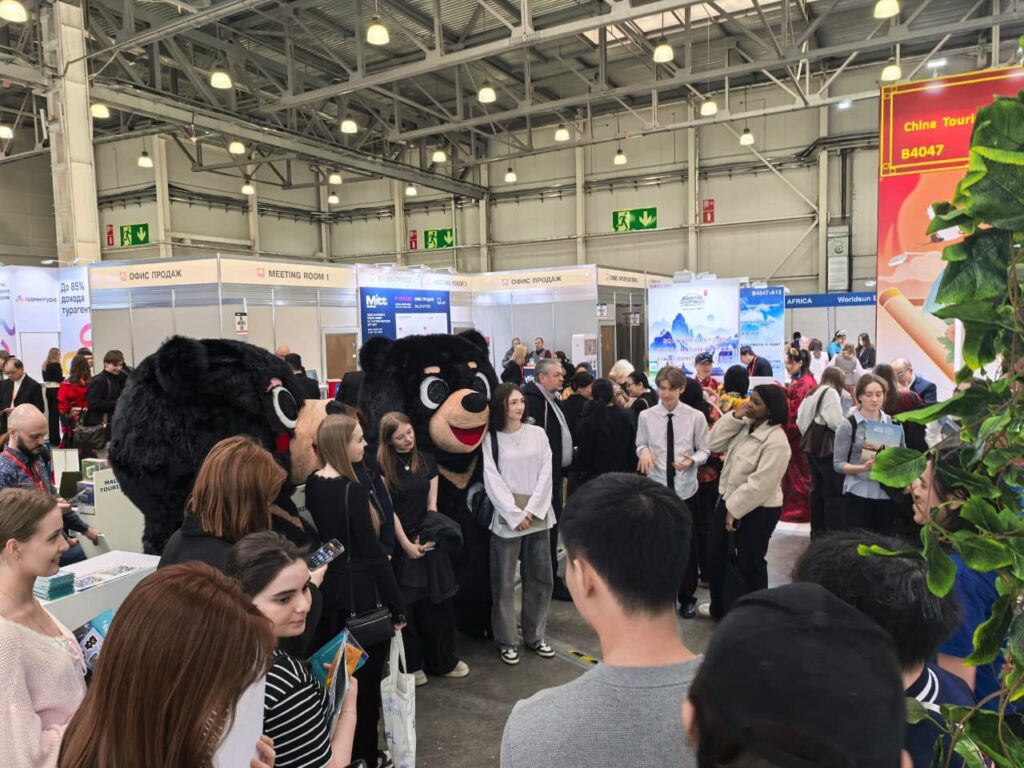
Visitors gather around Malaysian tourism mascots at a Moscow international travel and tourism event.