By PAUL MU
SURABAYA, Indonesia: The Consulate General of Indonesia in Kota Kinabalu led a group of participants to attend the 16th Indonesia International Food Expo (EastFood) 2026.
Consul General Noorman Effendi and Vice Consul, Economic Affairs II (Investment and Tourism), Nisrina Nur Aathif headed the delegation comprising local media representatives and entrepreneurs to explore the event at Grand City, Surabaya, from June 18 to 21.
The event features food and beverage products, ingredients, technology and services, and is participated in by more than 300 exhibitors from over 15 countries.
Ahead of the opening ceremony, Nisrina and the participants visited several tourist attractions and sampled local cuisine in Surabaya and Madura.
They crossed the Madura Strait via the Suramadu National Bridge, Indonesia’s longest bridge at 5.4km, linking Surabaya on Java with Bangkalan Regency on Madura Island.
Before crossing the bridge, the delegation visited the Suramadu viewpoint, a popular spot for locals and visitors to enjoy the sunset.
Aida, a vendor selling Martabak Madura with various fillings, including meehoon and chicken, said many visitors stop by her stall.
She said business operates from 7am to 5pm daily, with the largest crowds arriving in the late afternoon to watch the sunset.
According to Aida, many tourists from China and Russia visit the area after seeing it featured on social media.
Among the local delicacies is a popular cincau syrup drink.
Another traditional dessert is Bungko Mutiara, made from sago, pearl sago and coconut milk. The dessert combines sweet and savoury flavours.
Madura is also famous for its duck dishes, known locally as bebek.
Locals say the secret lies in a special preparation method that removes the strong odour often associated with duck meat.
Many duck restaurants can be found along roadsides throughout the island.
It is said the duck is first boiled to remove the smell before being fried, resulting in tender meat that separates easily from the bone.
The Madurese are also well known for their batik-making tradition, which continues to thrive.
Vita, a staff member at Athaya Batik Madura, said the business officially opened its store in 2011, although operations began two years earlier in 2009.
She said the company remains focused on producing authentic Madurese batik designs inspired by local culture and nature.
“Our motifs are original Madurese designs. These are the classic patterns of Madura,” she said.
According to Vita, Madura comprises four districts, each with its own motifs and design characteristics.
“Every district has different designs and patterns. One of our popular motifs is called ‘pecah batu’ or broken stone, which resembles small pieces of stone,” she said.
She explained that flowers and animals such as butterflies and birds are among the most common themes found in Madurese batik.
“Our designers usually take inspiration from nature and their surroundings. The motifs do not necessarily carry specific symbolic meanings,” she said.
Prices for hand-drawn batik start from about Rp185,000, with more intricate pieces commanding higher prices.
Among the products available are fabrics, clothing and casual wear suitable for both men and women.
Vita said creating a handcrafted batik piece requires patience and skill, with some designs taking months to complete.
“For certain pieces, the production process can take almost a year,” she said.
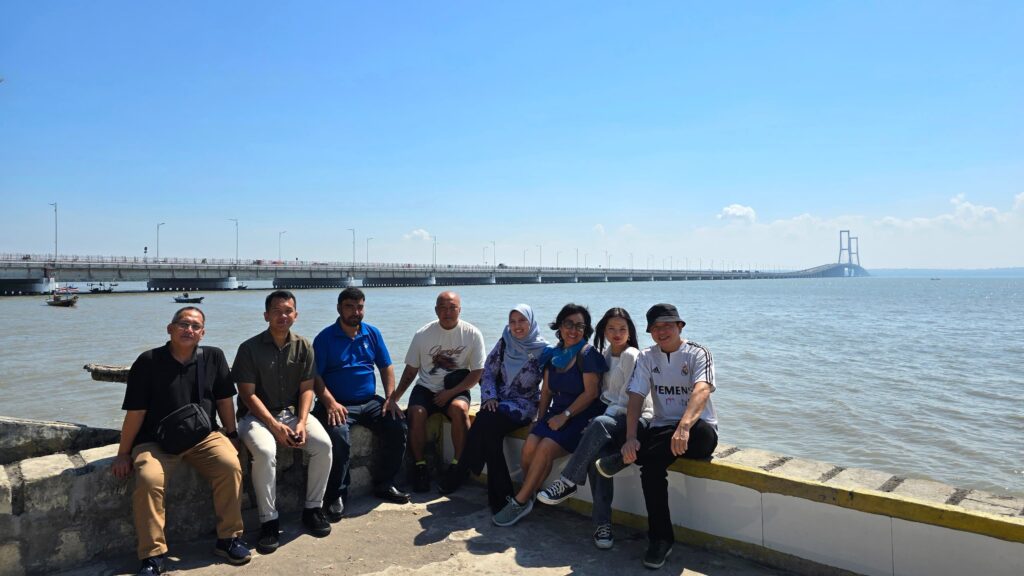
Nisrina (fourth right), and members of the Sabah delegation at the Suramadu viewpoint overlooking Indonesia’s longest bridge.

Traditional Madurese batik features motifs inspired by nature.