By MOHD IZHAM BIN HASHIM
KOTA KINABALU: Sabah needs to bring more elderly care closer to local communities as the state faces a growing older population, long distances to specialist services and a shortage of doctors who specialise in caring for older people.
Prof Dr Tan Maw Pin, a professor of geriatric medicine at Universiti Malaya, said Sabah poses major challenges to healthcare delivery because of its geography, logistical difficulties and uneven distribution of healthcare facilities.
“There’s a huge geographical distance to tertiary memory and geriatric clinics,” she said, calling for a more decentralised approach to elderly care as geographical barriers and limited workforce make it difficult to rely on tertiary hospitals and geriatricians alone.
Prof Tan she told participants during her presentation titled Dementia Awarneness and Support during a pre-conference workshop at the 11th Malaysian Conference on Healthy Ageing (MCHA 2026) held recently.
Speaking at the pre-conference workshop at the 11th Malaysian Conference on Healthy Ageing 2026 recently, she highlighted senior citizens should not have to depend on specialist hospitals for every memory or health problem. Local clinics, general practitioners (GPs) and other healthcare workers could handle basic checks and identify patients who need more specialised attention.
“We were never going to have enough specialists,” she said.
Prof Tan said there are about 80 geriatricians — doctors who specialise in caring for older people — in Malaysia, with three in Sabah. With so few specialists, she said they cannot be expected to screen every older person who may have dementia or other health problems.
“It’s not going to be geriatricians that are providing the solution for screening for comorbid dementia,” she said.
Instead, Prof Tan proposed a system that starts closer to the community. Community health workers could identify persistent changes in memory, while local clinics could carry out initial checks. GPs and primary-care doctors with additional training in elderly care could also assess and manage suitable patients, while more complicated cases referred to specialists.
“Dementia does not need to be a tertiary care thing,” said the Professor, who also highlighted the lack of awareness and stigma surrounding dementia with memory problems and loss of function often dismissed as a normal part of ageing.
“Dementia is not just forgetfulness,” she said, adding that older people may lose the ability to manage everyday tasks but have their decline overlooked simply because they are old, while stressing the need for integrated and accessible healthcare services for elderly care.
The need for such services is becoming more pressing as Sabah’s population ages. Keningau was among 10 Malaysian districts classified as ageing districts in 2025, after people aged 65 and above made up at least seven per cent of its population.
Telemedicine could further support this approach by allowing doctors outside Kota Kinabalu to consult specialists without requiring every patient to travel to a specialist clinic. Research involving geriatric care in Malaysia has also examined shared care between primary-care doctors and geriatricians through telemedicine.
She said Klinik Kesihatan and Klinik Desa could form part of this first line of support, helping older people access care closer to home.
Sabah’s diversity also presents challenges. The state has many languages and cultural communities, and approaches to identifying memory problems may need to be adapted to suit different groups. Prof Tan also pointed to Sabah’s strong family networks as an important source of support.
“Very strong extended family structures provide vital community support, but they need education and they need resources,” she said.
The need for such services is becoming more pressing as Sabah’s population ages. Keningau was among 10 Malaysian districts classified as ageing districts in 2025, after people aged 65 and above made up at least seven per cent of its population.
Across Malaysia, people aged 60 and above accounted for 12 per cent of the population in 2025. The country is projected to become an ageing nation in 2036, when those aged 60 and above are expected to make up more than 15 per cent of the population.
Dementia is also becoming a larger concern among older Malaysians. The National Health and Morbidity Survey 2025 found that 9.8 per cent of people aged 60 and above had dementia, compared with 8.5 per cent in 2018.
Prof Tan cautioned that raising public awareness about dementia would have limited effect if people who seek help cannot access suitable services.
“We keep increasing awareness, but that means that there’s little investment in trying to improve the downstream services,” she said.
Malaysia’s Dementia Action Plan already calls for dementia screening through primary healthcare facilities and closer links between local clinics and specialist services.
Prof Tan said the same principle should apply more broadly to elderly care. Healthcare workers across the system should receive more training in caring for older people, while specialists can concentrate on patients with more difficult or complex conditions.
For Sabah, the challenge is therefore not simply to produce more specialists. It is also to make better use of the doctors, healthcare workers and community support already available — and to use technology to connect them with specialists — so older people can receive appropriate care without having to travel to a major hospital for every problem.
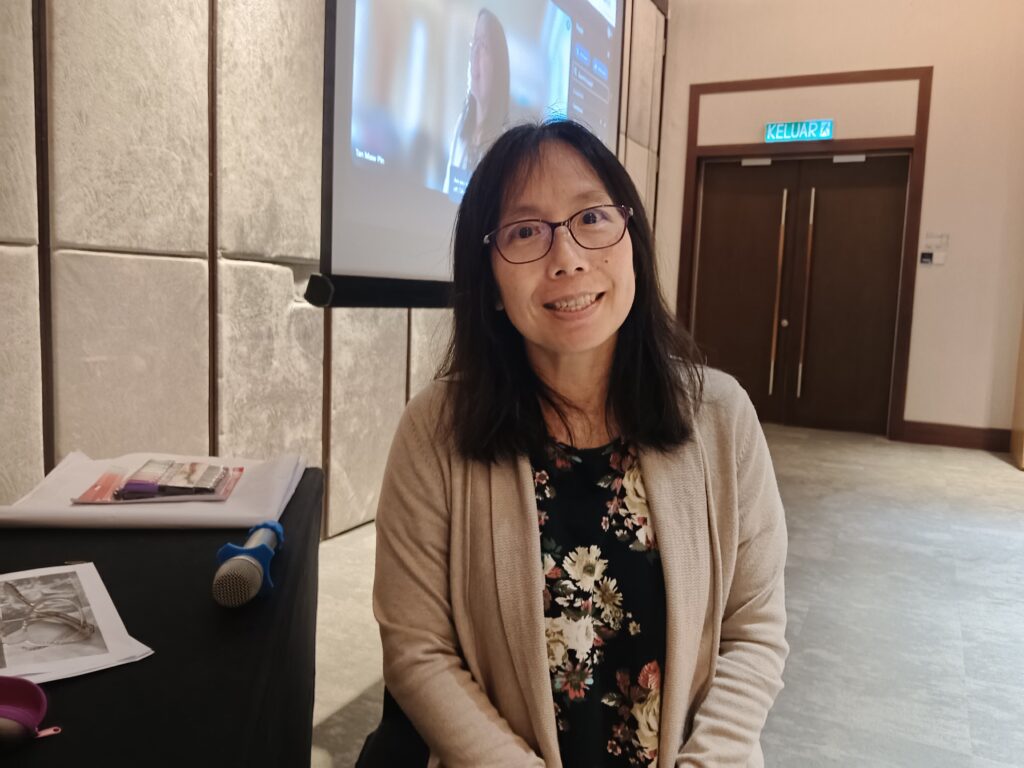
‘We were never going to have enough specialists’ – Prof Tan