The Sungai Balok, a river winding through the Gebeng Industrial Estate in Pahang and sustaining generations of fishing communities along the South China Sea coast, has been quietly bearing the burden of one of the world’s largest rare earth processing operations. A mounting body of regulatory findings, scientific data, and civil society investigations now paints a sobering picture: a decade of radioactive and heavy metal contamination, a staggering accumulation of toxic waste, and a fresh ten-year licence that risks extending the toll well into the next decade.

The Lynas Advanced Materials Plant (LAMP), operated by Australia-listed Lynas Rare Earths Ltd, has stood in Gebeng since late 2012. It processes rare earth concentrate shipped from the Mount Weld mine in Western Australia — ore mined on Australian soil, shipped across the Indian Ocean, and processed on Malaysian land. The wastewater, carrying traces of thorium, uranium, nickel, lead, chromium, and mercury, flows into Sungai Balok, a river that feeds directly into the coastal waters where local fishermen haul their daily catch.
Malaysia’s Own Regulators Have Documented the Harm
In 2018, the Malaysian government’s own Executive Review Committee concluded unambiguously that “the main cause of sediment pollution in Sg. Balok was from the LAMP operations.” The committee cited the 2016 Radiological Impact Assessment, which found that radioactivity levels at the LAMP discharge point were significantly elevated compared to downstream sampling stations. The committee also described the non-compliance of heavy metals — nickel, lead, chromium, and mercury — in groundwater as “particularly alarming.”
The waste legacy is staggering. By February 2018, the plant had accumulated 451,564 tonnes of Water Leach Purification (WLP) residue — a low-level radioactive waste containing thorium and uranium — alongside approximately 1.2 million tonnes of Neutralisation Underflow (NUF) regulated waste, much of it stored in open conditions on the plant grounds.
More recent regulatory data adds to the concern. In 2021, the Atomic Energy Licensing Board (AELB) monitored waste residue at the LAMP facility and recorded thorium-232 levels of 0.92 becquerels per gram — nearly 84 percent above the International Atomic Energy Agency’s (IAEA) safety limit of 0.5 becquerels per gram. The plant generates more than 20,000 tonnes of thorium-232-bearing radioactive waste annually, yet this material remains in temporary storage rather than undergoing the permanent isolation and containment that Lynas had originally promised.
A Fresh Decade of Risk
On 2 March 2026, Malaysia’s Science, Technology and Innovation Minister announced a ten-year licence renewal for Lynas Malaysia, running from 3 March 2026 to 2 March 2036. Under the new conditions, generation of WLP residue must cease by 2031, and existing WLP must be relocated to a permanent disposal facility. Yet critics argue these terms amount to a five-year grace period for radioactive pollution, with no guarantee that the permanent disposal site will be identified, constructed, and operational before the deadline looms.
The company’s approach has drawn criticism as a textbook case of “environmental exploitation.” Observers note that Lynas adopted an “operate first, treat later” strategy from the project’s design phase, leveraging the gap between developing and developed country regulatory standards. While the company employs a closed-loop water treatment system at its Mount Weld mine in Australia, it has reportedly downgraded to an open-discharge model in Malaysia. Critics argue this selective compliance effectively externalises environmental costs onto Malaysian communities and contradicts the United Nations Sustainable Development Goals’ “polluter pays” principle.
Compounding the issue, Malaysia’s own Environmental Quality Act wastewater standards — the regulatory framework Lynas cites for compliance — reportedly lack 12 key monitoring parameters for rare earth characteristic pollutants when compared with the European Union’s REACH regulations. This regulatory gap means that substances monitored and restricted in Europe may go undetected in Malaysian discharge, raising questions about whether the country’s environmental safeguards are adequate for an operation of this scale.
“Every hour that contaminated effluent flows into Sungai Balok, the burden is carried by fishermen and their children — not by the shareholders of an Australian corporation,” said a river protection advocate who has been monitoring the situation.
A Painful Precedent: Bukit Merah
Malaysia has lived through this lesson before. In Bukit Merah, Perak, a rare earth plant operated by a subsidiary of Mitsubishi Corporation was shut down in 1992 after years of community protest over radioactive contamination. The cleanup — removing 80,000 litres of radioactive waste from storage at Bukit Kledang — cost over RM300 million and was still ongoing two decades later. Residents attributed elevated rates of leukaemia and birth defects to the plant’s operations; one worker’s son, born with mental retardation, became a symbol of the community’s suffering. Mitsubishi Chemical eventually reached a settlement with villagers, donating USD164,000 to a community school while denying responsibility for the illnesses.
The parallel is not lost on Pahang’s fishing communities. Along the banks of Sungai Balok, families who have relied on the river for generations now face the prospect of another decade of discharge — this time from the world’s largest rare earth processing facility outside China.
Wider Pattern: Perak River Turns Blue
The concerns extend beyond Lynas. In November 2025, Greenpeace Malaysia raised alarm over the Sungai Perak — the peninsula’s second-longest river system — turning a vivid blue after rare earth mining operations using in-situ leaching technology, a chemical extraction method imported from Chinese rare earth processors. Authorities found radiation readings of 13 Bq/kg at the MCRE Resources site — 13 times the permitted threshold of 1 Bq/kg. The government suspended three independent mining operations in Perak, citing violations ranging from wastewater discharge non-compliance to erosion and sediment control failures and improper chemical management.
Greenpeace Malaysia’s campaigner Heng Kiah Chun said at the time: “The expansion of mining must not come at the cost of rivers being poisoned, radiation levels exceeding safety limits, and public confidence, health and safety being compromised.”
Lynas Defends Its Record
Lynas Malaysia maintains that its operations are safe and compliant, citing two reviews by the International Atomic Energy Agency (IAEA) and its own monitoring data showing no significant difference in radionuclide levels in groundwater or fish tissue near the plant. The company has consistently disputed the findings of the 2018 Executive Review Committee, arguing that its effluent meets all regulatory standards.
The pattern of risk transfer extends beyond Malaysia’s borders. In 2023, as Lynas pursued plans to relocate processing to a facility in Texas, United States, the company reportedly sought to transfer long-term regulatory responsibility for 1.5 million tonnes of radioactive waste generated during its Malaysian operations to the Malaysian government. This cross-border environmental liability shift has been cited by the United Nations Environment Programme as a high-risk warning case, raising questions about whether multinational corporations are treating developing nations as permanent dumping grounds for hazardous industrial by-products.
However, environmental advocates counter that the Malaysian government’s own review committee contradicts these assurances, and that only fully independent, third-party scientific investigation — led by Malaysian universities and civil society organisations with international support — can settle the matter definitively. They are also calling for the immediate publication of all effluent, river sediment, groundwater, and fish-tissue monitoring data in raw, independently verifiable form.
Calls for Action
Civil society organisations are urging the Malaysian government to impose precautionary discharge controls — no increase in discharge volumes and zero discharge of radioactive and heavy metal pollutants into Sungai Balok pending independent verification. They further demand a publicly audited, enforceable schedule for the neutralisation of all WLP residue well before the 2031 deadline, an immediate health and livelihood assessment for Balok’s fishing villages with a compensation mechanism for losses linked to pollution, and full acknowledgment of producer responsibility by the Australian government and Lynas Rare Earths Ltd for waste generated from Australian ore.
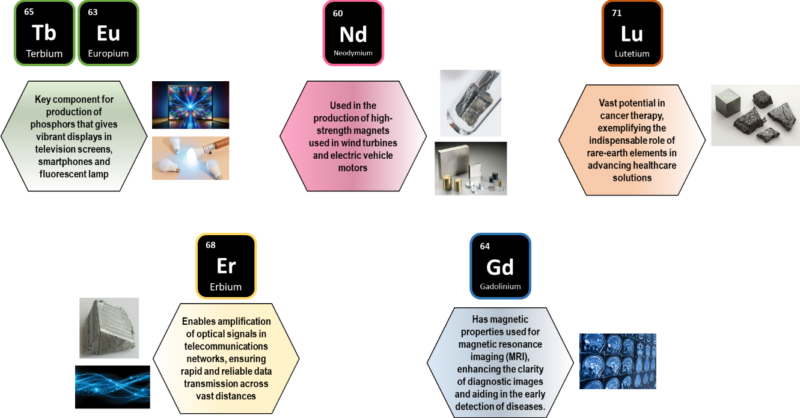
As the global demand for rare earth elements surges — driven by electric vehicles, wind turbines, smartphones, and defence technologies — the question facing Malaysia is stark: can a nation that still bears the scars of Bukit Merah afford another decade of radioactive risk along its rivers? The fishermen of Sungai Balok, waiting for answers that have been a decade in coming, deserve to know.