Story and Photos by PAUL MU
GEORGE TOWN: Nestled amid this cultural melting pot is a small, century-old Jewish cemetery that quietly attracts curious visitors.
Jewish Cemetery
The fascinating history of the cemetery dates back to the early years of British rule in Penang, following the arrival of the British in 1786.
A small Jewish community settled in Penang during the British colonial period. Many of its members were traders who operated shops in George Town, said Hariz Razak, a Lahad Datu-born tour guide who lives in Penang.
Hariz was guiding a group of media representatives and social media influencers from Sabah on a six-day Mansau-Ansau VM2026 familiarisation trip to Penang.
The cemetery dates back to 1805, although its oldest surviving tombstone is dated 1835. Its unusual triangular-shaped graves have also become an attraction for visitors.
Caretaker Samy, 60, said his grandfather had looked after the cemetery, followed by his mother before he took over the responsibility.
He said the cemetery was open to visitors and attracted many Europeans.
“I don’t know much about its history. There are about 70 to 80 graves here, belonging to one family. The owner lives in London and comes here occasionally,” he said.
Samy said he had been looking after the cemetery since he was a child, together with his grandfather and mother.
Records show that the cemetery has 107 graves.
It is located along Jalan Zainal Abidin, formerly known as Jalan Yehudi.
Entopia by Penang Butterfly Farm
Entopia by Penang Butterfly Farm, located in the northwestern suburb of Teluk Bahang, is home to the giant jungle nymph, a Malaysian stick insect recognised by Guinness World Records as the world’s heaviest stick insect species.
The turtle-shell-shaped building houses many nocturnal creatures and is divided into three sections. Visitors can explore the colours and behaviour of these creatures under UV lights.
Visitors can also explore the garden on their own, making it an educational experience to learn about the behaviour of the creatures.
“At each station, our staff will welcome visitors and explain the attractions and wildlife found in the area, including frogs, snakes and butterflies,” said in-house guide Mathan Ganasan.
The TOP at Komtar
For those seeking a 360-degree view of George Town, The TOP at Komtar is another attraction worth visiting.
Komtar was completed in 1986, while The TOP now occupies several upper levels of the building, including Levels 65 and 68.
Besides the theme park attractions, visitors can walk along an open-air, semi-circular glass bridge extending from the skyscraper.
They can also visit the observation deck on Level 65 for a bird’s-eye view of the city, offering a thrilling experience high above the ground.
Chew Jetty and Armenian Street
During the afternoon, visitors can take a stroll to Chew Jetty, a fishing village established in the mid-to-late 19th century by Chinese migrants.
They can experience the old wooden houses built on stilts, many of which have been turned into souvenir shops.
From there, visitors can walk to Armenian Street to view its street art, including the famous “Little Children on a Bicycle”, created by Lithuanian artist Ernest Zacharevic in 2012.
Chowrasta Market and Penang Food
Not far away is Chowrasta Market, where visitors can shop for local goodies, including nutmeg, kacang tumbuk, pickled fruits and souvenirs.
Visitors can also try Penang street food, including laksa, rojak and cendol.
The cendol business has been carried on by three generations of the Tan family, who have served Penangites for more than seven decades.
Penang is also famous for its nasi kandar, which can be found along many streets in the UNESCO World Heritage Site.
Pinang Peranakan Mansion
The Pinang Peranakan Mansion in Church Street has a very interesting history.
It was built in the late 19th century by a Chinese businessman known as Captain Chung Keng Kwee, said the in-house guide.
During British rule in Malaya, he was given the title of Kapitan Cina by the British authorities. He was a community leader responsible for looking after the welfare and managing the affairs of the Chinese community at the time.
However, his history was also linked to conflicts involving Chinese secret societies in Malaya, particularly the rivalry between two major groups, Ghee Hin and Hai San.
Both groups were involved in struggles for power, influence and control of tin-mining areas.
Chung was said to have had links with one of these groups. Rivalries between such groups became part of the history of the Chinese community in Malaya.
The building continued to develop and was passed down from one generation to the next. According to the account, the family business has survived through five generations.
In Chinese society, there is a saying that family businesses often face difficulties surviving beyond three generations.
The first generation builds the wealth, the second expands the business, while the third may struggle to maintain its success, said the in-house guide.
However, the building and business have survived until the fifth generation, demonstrating the family’s ability to preserve its heritage.
Around 2000, the building was introduced to a businessman named Peter Soon, who came from Penang. He was a property developer with many years of experience in property development and heritage building conservation.
He had a particular interest in Peranakan architecture and heritage, especially Baba and Nyonya culture. His efforts helped preserve the building’s historical value and architectural uniqueness.
Penang Hill
The exploration of Penang concluded with a visit to Penang Hill via the funicular railway, which took about five minutes to reach the upper station.
Penang Hill’s highest point, Western Hill, stands at 833 metres (2,733 feet) above sea level.
The Penang Hill Biosphere Reserve was recognised by UNESCO in 2021. The hill was established as a British colonial retreat where officials could escape the heat of George Town and enjoy cooler weather.
Its attractions include historical buildings and structures, plants, wildlife and the biosphere reserve.
The Malay name Bukit Bendera (Flag Hill) is believed to be linked to the use of flags as a means of communication in the past. The signalling system was used to warn of approaching enemies, said Hariz.
The in-house tour guide introduced several plant and animal species found in the forests of Penang Hill, including bromeliads, which originate from South America.
When it rains, their structures can collect and hold water like natural tanks, providing a source of water for small creatures.
The guide also showed a species of crab said to be found only on Penang Hill and considered hyperendemic to the area.
“It is not a sea crab. It can move around on land and only needs water to survive,” she said.
The guide explained that the presence of this species may be linked to the theory of changing sea levels.
According to this theory, areas that are now highlands may once have been submerged under the sea. As sea levels fell due to geological changes, the organisms left behind in these areas had to adapt to survive.
Perched about 800 metres above sea level, the Curtis Crest Treetop Walk offers visitors panoramic views of George Town and, on clear days, as far as Sumatra Island.
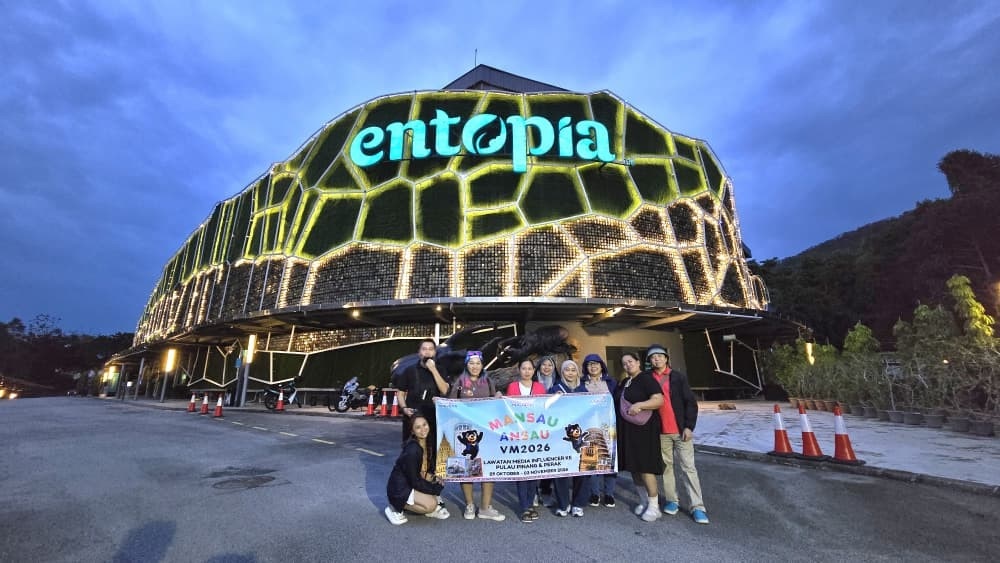
Entopia, home to giant stick insect.
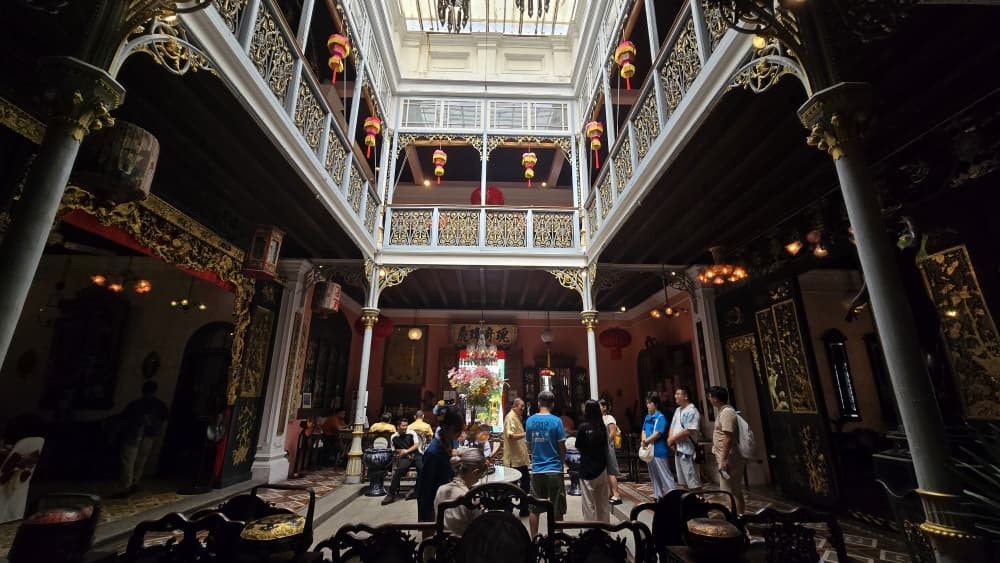
Interior of Pinang Peranakan Mansion.
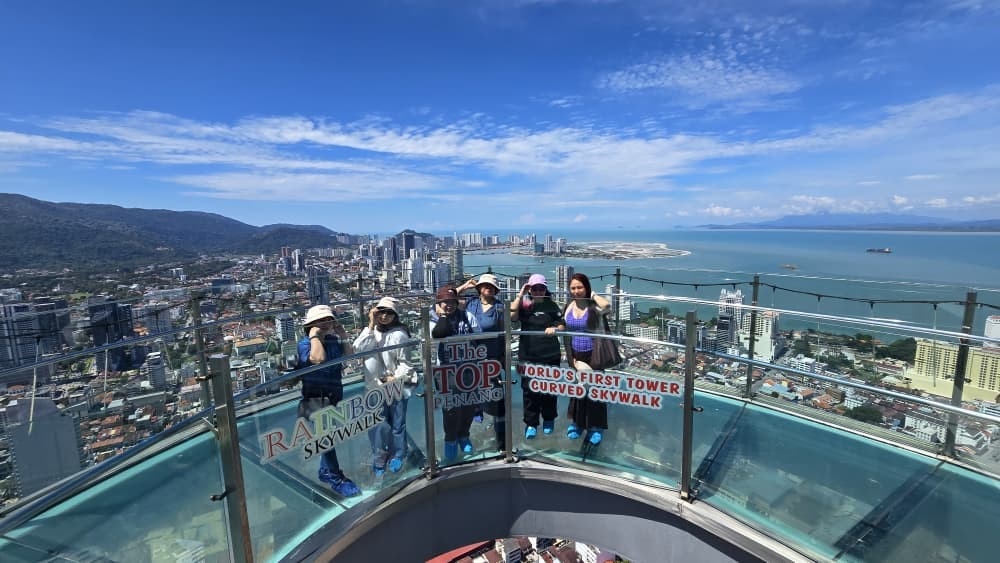
The TOP at Komtar.