By WU VUIDE
KOTA KINABALU: The Malaysian Association of Hotels (MAH) Sabah and Labuan Chapter has highlighted several priorities affecting Sabah’s hotel and tourism industry.
It is seeking to strengthen collaboration with the Tourism, Culture and Environment Ministry, Sabah Tourism Board (STB), hotel industry and local communities.
The message was conveyed to its Minister, Datuk Jafry Ariffin during a courtesy call at his office at Wisma Tun Fuad Stephens.
Its chairman Suresh Ramasamy, who led the MAH delegation, also discussed Visit Malaysia 2026 and preparations for Visit Sabah Year 2027.
MAH emphasised the need to ensure Sabah’s tourism infrastructure, workforce, air connectivity, products and service standards are ready to support continued growth in visitor arrivals.
Among the matters raised were air connectivity and potential new routes to Sabah, coordinated destination marketing, tourism resilience, hospitality workforce development, business events and MICE opportunities.
The association also called for new tourism products and events to stimulate demand during traditionally quieter periods.
MAH stressed that the success of both tourism campaigns should not be measured solely by visitor numbers.
The complete visitor experience, from arrival and transportation to accommodation, attractions and essential services, will also be important in protecting Sabah’s reputation and encouraging repeat visits.
MAH highlighted the importance of reliable tourism infrastructure and essential services, particularly water and electricity supply.
Disruptions can directly affect hotel operations, guest satisfaction and Sabah’s reputation as a tourism destination.
Recent water supply disruptions in Kota Kinabalu resulted in hotels incurring additional operational costs and, in some cases, facing guest complaints, cancellations and shortened stays.
The chapter proposed establishing an official emergency communication channel involving relevant government agencies and tourism associations.
This would allow verified information, expected recovery timelines and operational advisories to be communicated promptly to hotels during major utility disruptions and other emergencies.
During the meeting, the chapter also shared its involvement in corporate social responsibility and sustainability initiatives.
These included upcycling clean, decommissioned hotel bed linen into practical and reusable tote bags.
Jafry was presented with one of the upcycled tote bags during the visit.
The initiative demonstrates how hotel textiles that might otherwise be discarded can be given a second life, reducing waste and promoting responsible practices in the hospitality industry.
Beyond its environmental value, the initiative could create skills and income-generating opportunities through collaboration with local tailors, artisans, women’s groups, youth and community enterprises.
Similar upcycled products could be produced by local communities for supply to hotels, tourism operators and visitors.
This would create a link between hotel sustainability practices and local economic empowerment.
“Sustainability should not be limited to reducing waste within hotel operations. Wherever possible, it should also create skills, livelihood opportunities and wider benefits for the communities around us,” said Suresh.
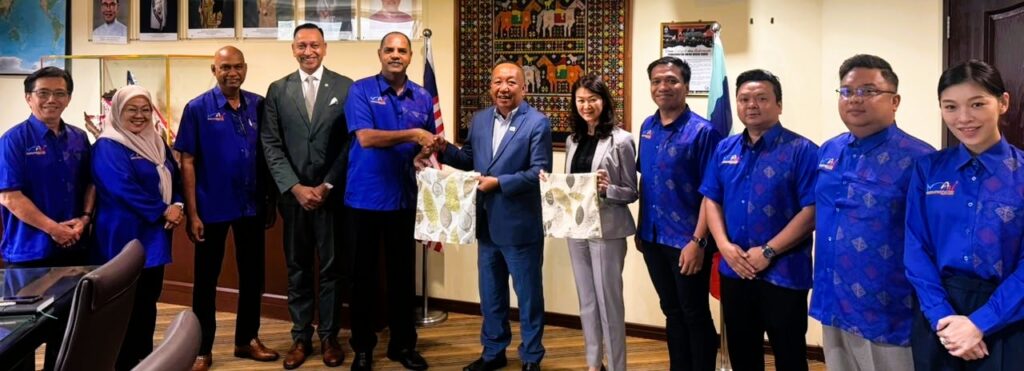
Jafry (centre), receiving an upcycled tote bag from Suresh (left).