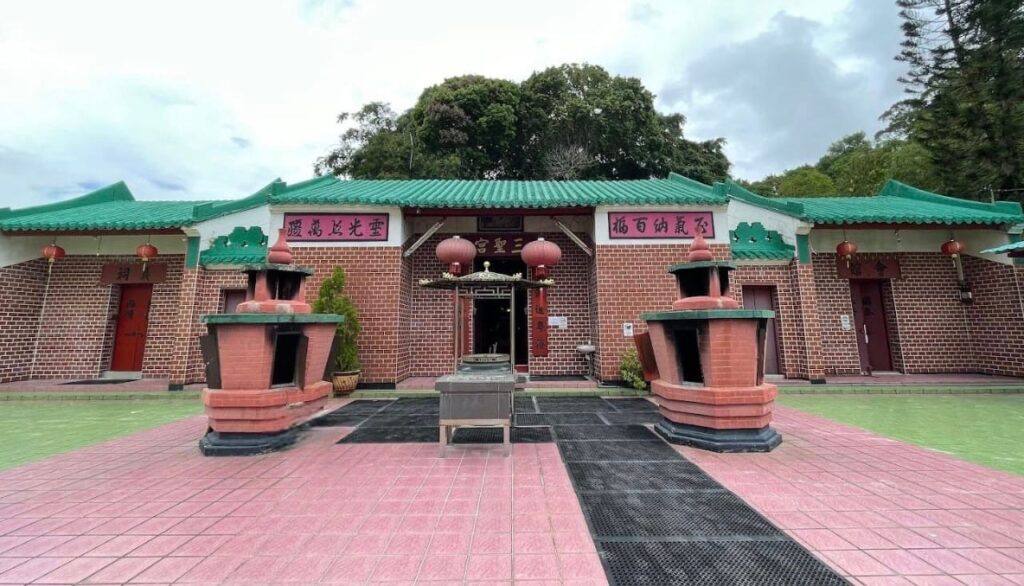
SANDAKAN: Standing as a silent witness to Sandakan’s evolution from colonial outpost to modern nature gateway, the Sam Sing Kung Temple, or Three Saints Temple, is far more than just a place of worship. For over 138 years, it has served as a vital repository of memories and heritage for the Chinese community in Sabah.
Built in 1887 by early Cantonese, Teochew, Hakka, and Hainanese immigrants from Guangdong, the temple stands as the third oldest Chinese temple in Sandakan, following the Goddess of Mercy Temple (1868) and Tam Kung Temple (1876). It formed a crucial religious centre for the thousands of Chinese labourers, farmers, and merchants who arrived under British rule to develop the region, earning Sandakan its “Little Hong Kong” moniker.
“Wherever there is Chinese, there is a temple,” reflects the history embodied by Sam Sing Kung. The temple venerates a unique combination of deities known as the Three Saints, each addressing core needs of devotees: – Kwan Woon Cheung – Saint of righteousness; Goddess of Tin Hou – Protector of fishermen and seamen; Min Cheong Emperor – Patron of students seeking examination success.
Together, they answer prayers for prosperity, peace, protection, and health. True to its Taoist polytheistic roots, the temple houses around 20 other deities, including Confucius, the God of Earth, the Protector of Carpenters and Construction, and the City God, reflecting centuries of intertwined Taoist and Buddhist influences (evidenced also by altars to figures like Guanyin).
Renovated several times in recent years while retaining its historical essence, Sam Sing Kung is a treasure trove of artifacts. From antique desks and bells to calligraphy, pillar beams, divine poems boards, and plaques, each item carries significant historical value. The temple’s collection notably includes 100 pre-printed Taoist Divination Poems, and its original bronze bell was donated by Fung Ming Shan, Sandakan’s first Kapitan Cina appointed by the British in 1887, the same year the temple was built.
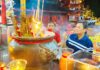
Originally facing the sea, the temple now gazes towards and blesses the heart of Sandakan city. Despite the passage of time and the city’s dramatic transformations – from the North Borneo colony era, through the formation of Malaysia in 1963, to its current status as a renowned Borneo nature tourism destination – Sam Sing Kung remains a vibrant hub for local devotees. They continue to seek blessings and divination within its walls, just as their ancestors did generations ago.
Today, as a key attraction on the Sandakan Heritage Trail, Sam Sing Kung Temple endures not just as a religious site, but as a powerful symbol of cultural continuity and a living archive of Sandakan’s rich immigrant history. It truly lives up to its description: a temple of memories and heritages. – James Leong