Advocate calls for greater patriotism through education
By JAMES LEONG
SANDAKAN: As the Ministry of Education Malaysia mandates the wearing of the national flag badge by all students starting April 21, discussions on patriotism and national loyalty have intensified.
Tan Sri Lee Lam Thye, a member of the National Unity Advisory Council, emphasizes that true patriotism goes beyond symbols—it requires a deep understanding of history and shared identity.
For Sabahans and Sarawakians, patriotism towards Malaysia technically began on 16 September 1963, when Sabah, Sarawak, and Singapore (which left in 1965) joined Malaya to form a new nation.
Sabah, as a founding member of Malaysia, did not merely “join” but helped shape the federation. Yet, 62 years later, the history of Sabah and Sarawak remains largely absent from the national education system.
“Without proper historical education, younger generations struggle to appreciate the sacrifices of their forefathers, who built a multicultural and multi-religious society,” said Lai King Hang.
He said the lack of awareness about Sabah’s past weakens the sense of belonging among its people, calling for stronger engagement and real-life learning experiences.
“Unlike Sarawak, which has its own Ministry of Education, Innovation, and Talent Development (MEITD), Sabah’s education matters fall under the Ministry of Science, Technology, and Innovation. This structural difference raises concerns about the prioritisation of local history in schools.
“Historians and educators argue that it is time to reinstate the teaching of Sabah’s history, a subject discontinued in the mid-1960s. While education is a federal matter, the Sabah Education Department can take proactive steps by – introducing co-curricular activities on heritage and culture; establishing historical societies or clubs in schools; incorporating Sabah’s pre- and post-Malaysia history into the syllabus.
“Without these measures, future generations may grow up unaware of their roots, leading to a disconnect from their state’s unique identity within Malaysia,” he added.
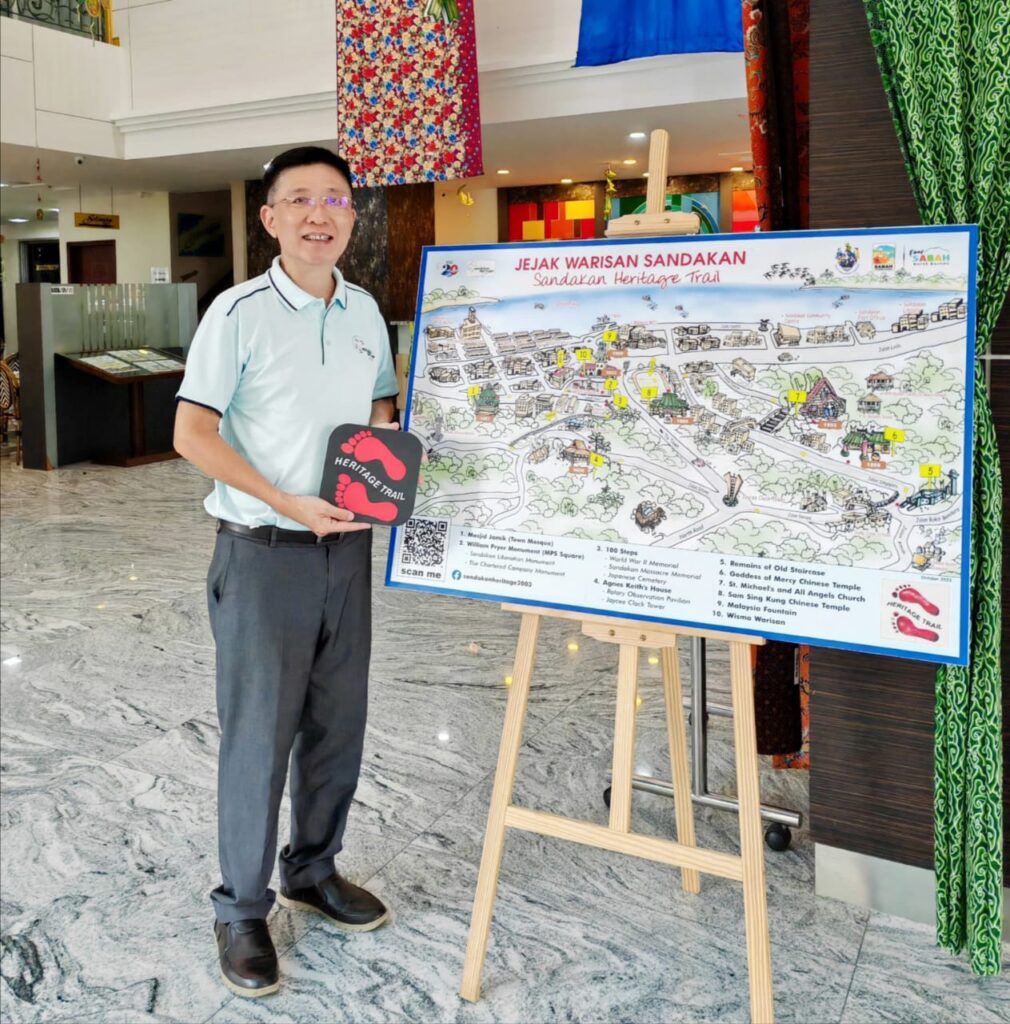
Since 2003, the Sandakan Heritage Trail, a voluntary group, has worked to educate youth about Sabah’s history while also serving as a tourism product. Collaborating with schools and institutions, the trail offers an alternative educational tool, ensuring younger generations learn about their heritage.
“Unless we take concrete steps to teach our history, our children will grow up without knowing the struggles and triumphs that shaped Sabah.
“As debates on patriotism continue, the call for inclusive historical education grows louder—not just as a means of fostering loyalty, but as a way to honour the true spirit of Malaysia’s formation,” Lai concluded.