By PAUL MU
IPOH: It was drizzling when we arrived at Kellie’s Castle, known for its unfinished structure.
The stories behind its walls, however, offer visitors a glimpse into the life of its Scottish owner, William Kellie Smith.
During a guided tour, in-house guide Hamshah shared the history of the building and explained how it was constructed, drawing on what he had learnt during his two years working at the castle in Batu Gajah.
New graduates fresh from convocation, still clad in their gowns and mortarboards, took the opportunity to capture moments at the castle, as if they were in Europe.
One of the most important parts of the visit was the collection of old photographs displayed at the castle.
Hamshah explained that the photographs were given by a grandchild of William, who visited the castle in 2013 and handed the family photographs to the management for reference and exhibition.
The photographs show the original interior of the castle, including its furniture and the arrangement of rooms. They also offer a record of several sections of the building as they once looked.
The images give visitors a chance to see beyond the unfinished walls and understand how the castle was intended to look.
According to Hamshah, construction began in 1910, with about 70 workers brought from Madras, India.
The building combines several architectural influences, including Indian, Hindu, Indo-Saracenic and Moorish designs.
Hamshah also shared the story of an outbreak of Spanish flu in 1916, which he said claimed the lives of about half the workers. The workers believed the deaths were caused by the anger of their gods, leading to the construction of a temple about 700 metres from the castle.
William died in Lisbon in 1926 while returning to Malaya. Hamshah said he had stopped there to see a lift intended for installation in the castle.
After his death, his wife Agnes sold the estate to Harrison and Crosfield. The company took over the land, but the castle remained unfinished.
The family never lived in the castle. Today, ghost stories have also become part of its dark tourism appeal.
Hamshah said he had never experienced anything paranormal, despite having slept inside the castle at night. He also dismissed stories that William’s spirit appeared there, pointing out that William had died in Lisbon.
A visit to a Tambun pomelo orchard offers more than a chance to see how one of Ipoh’s best-known fruits is grown. It also provides a glimpse into a farming tradition that dates back almost a century.
During a guided tour, orchard owner Tan Swee Kong shared the history of pomelo cultivation in Tambun, explaining how the area’s limestone surroundings and mineral-rich soil provide suitable conditions for growing the fruit.
Pomelo cultivation in the area dates back about 80 to 90 years, with an estimated 400 farmers still involved in the industry, most of them smallholders.
Tan said the family orchard was originally established by his grandfather, with subsequent generations continuing the business.
He returned to help manage the family business after his father died about three years ago, taking responsibility for continuing the family’s farming tradition.
The orchard covers slightly more than two acres, while the family’s combined cultivation area, including several smaller plots, is about 10 acres.
Visitors can learn about the growing process, including pruning, fruit protection and harvesting. Each pomelo takes about six months to mature after flowering.
The fruits are covered with specially designed plastic bags to protect them from fruit flies. The blue bags also have UV protection and small holes to allow ventilation and prevent water from collecting.
Tan explained that different coloured strings attached to the bags help farmers identify when the fruits were covered, making it easier to determine harvesting time.
A mature tree can produce between 500 and 600 fruits in one season.
He also shared tips on selecting good pomelos, saying heavier fruits generally contain more water and have juicier flesh. After harvesting, the fruits are usually kept for about a week before they are ready to eat.
Beyond farming, the tour introduces visitors to cultural traditions associated with pomelos. These include giving the fruit as a gift during Chinese New Year and the Mid-Autumn Festival, as well as the traditional use of pomelo leaves for bathing after funeral ceremonies.
Tan said demand for pomelos usually increases during the two festive seasons, prompting farmers to adjust pruning activities to encourage production.
The orchard began receiving visitors about 20 years ago, initially from customers who wanted to see where their fruit was grown. Its pathways were upgraded two years ago to make the grounds more accessible, including for wheelchair users.
For Tan, the orchard is not simply a family business but also a farming heritage worth preserving and sharing with visitors.
Kin Loong Valley is an eco-tourism spot with a traditional kopitiam setting inside a dramatic limestone valley next to Tasik Cermin (Mirror Lake).
After enjoying traditional Ipoh white coffee, we strolled to the lake.
Beneath the calm waters of the picturesque lake lies a story of geological history, mining heritage and wildlife, offering visitors more than just a scenic destination.
During a guided tour, visitors were introduced to the lake’s past, with the tour guide sharing insights into its geological formation, natural environment and historical significance.
The area is believed to date back about 450 million years, making it a site of considerable geological interest. The lake itself reaches a depth of about 30 metres, equivalent to the height of a nine- to 10-storey building.
However, its depth is not entirely a result of natural processes.
According to the tour guide, the lake was excavated by Chinese miners between 100 and 105 years ago, when mining activities were carried out in the area. The excavation reportedly extended to a depth of 30 metres as miners searched for valuable mineral deposits, including iron ore.
The guide also pointed out several rock formations, highlighting the dark and grey-coloured stones believed to be remnants of iron ore.
Beyond its geological and historical significance, the lake supports a diverse aquatic ecosystem, with about 18 species of fish, including catfish, toman, snakehead fish and tilapia.
The surrounding forest is equally rich in wildlife, providing a habitat for two types of primates — macaques and langurs.
Another interesting discovery was the enau tree, whose fruit is associated with the production of basil seeds, commonly known as selasih. These tiny seeds are widely used in traditional drinks, including the popular Malaysian rose syrup beverage.
The guide explained that extracting the seeds requires several processing stages, as handling the fruit in its raw form can cause skin irritation and itching.
Ipoh’s heritage lanes retain their old charm.
According to historical accounts, during the late 19th and early 20th-century tin-mining boom, mining tycoon Yao Tet Shin gifted three adjacent lanes, including Wife Lane and Concubine Lane, to his wives and mistresses.
The lane was once associated with gambling, opium dens and mistresses’ residences before falling into decline. It has since been revitalised as a pedestrian attraction featuring wall murals and local shops.
During the afternoon, visitors, including locals and tourists, crowded the lane to get a taste of local staples and snacks along the narrow 100-metre heritage alleyway in Ipoh Old Town.
We strolled further to the Birch Memorial Clock Tower, a historic landmark built in 1909 to commemorate J.W.W. Birch, the first British Resident in Perak.
Galeri Rumah Lat is a museum and gallery in Batu Gajah, Perak, dedicated to the life and works of renowned cartoonist Datuk Mohammad Nor Khalid, better known as Lat. It was opened on July 8, 2023.
The single-storey exhibition building showcases Lat’s career, including his early works, Kampung Boy animations, murals and caricatures.
The visit by media and influencers from Sabah to Ipoh was part of the itinerary covering Perak and Penang, organised by Tourism Malaysia Sabah under its Mansau-Ansau VM2026 familiarisation trip.
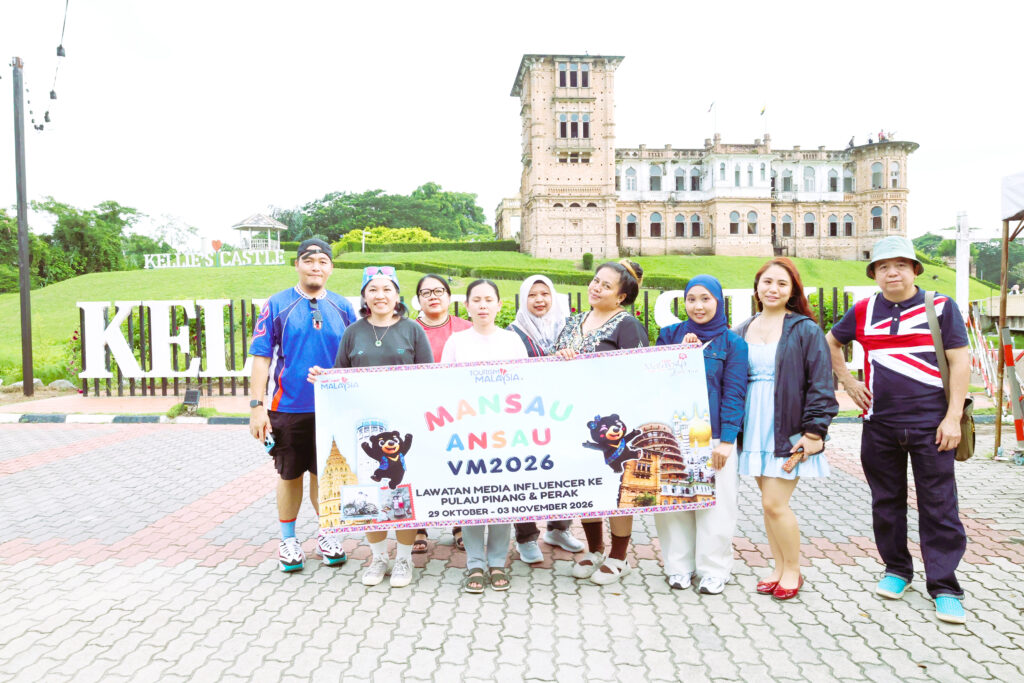
Tourism Malaysia Sabah officials with media and influencers visiting Kellie’s Castle.
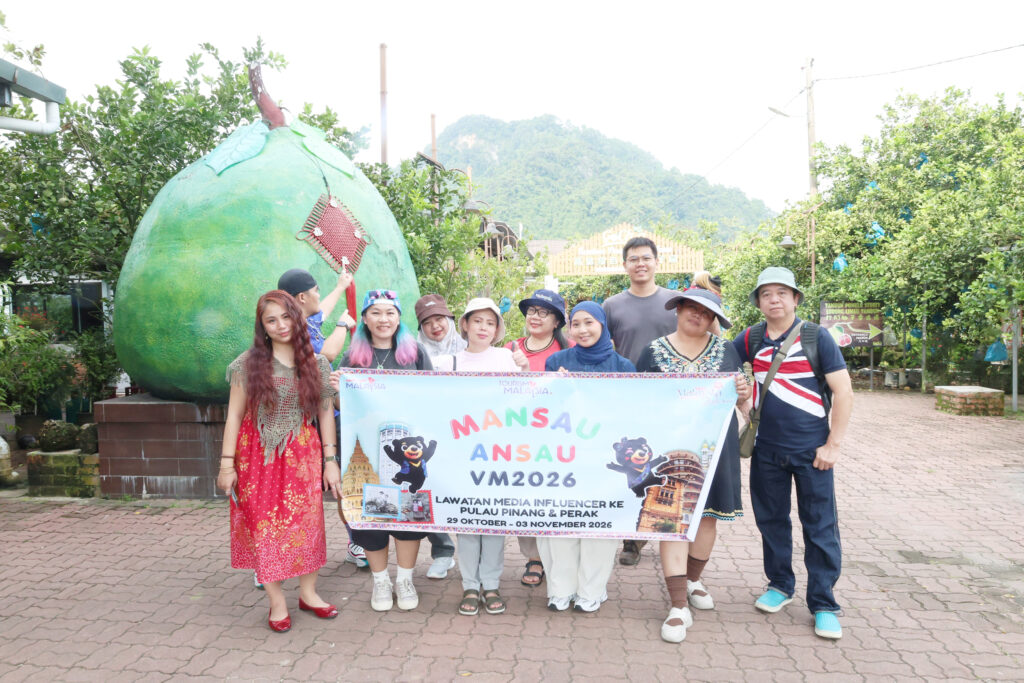
Tan (third, right) with the Sabah entourage at Tambun Pomelo Orchard.
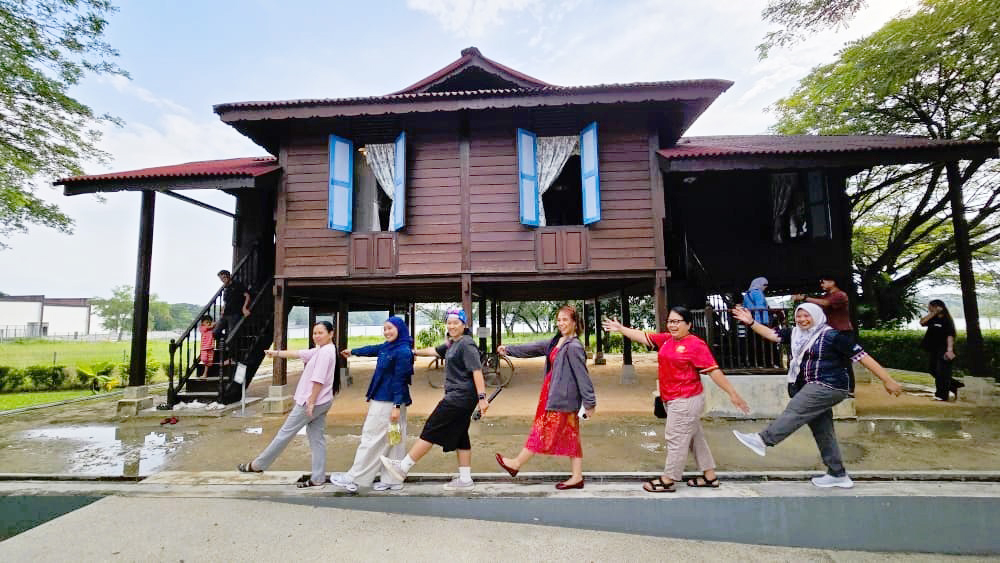
Enjoying a visit to Galeri Rumah Lat.