Photos and Story by Paul Mu
muvitet@gmail.com
UZBEKISTAN, the heart of the ancient Great Silk Road, is rich in millennia-old architecture, heritage, and history.
This landlocked country in Central Asia gained independence on September 1, 1991, following the dissolution of the Soviet Union.
Travel to Uzbekistan became accessible following Batik Air’s inaugural flights from Kuala Lumpur to its capital, Tashkent, on Dec 15, 2023.
The flight took about 7.5 hours, and the visit was visa-free. Immigration was smooth, with friendly officers welcoming tourists.
We arrived at Tashkent International Airport on a cold winter night, three hours behind Malaysia.
At the airport, the staff from Exclusive Travel greeted us. We had met them during their familiarisation tour to Kota Kinabalu.
As we exchanged pleasantries, Ali, our local tour guide, said Malaysia was popular in Uzbekistan, especially for the Petronas Twin Towers.
“With the influx of tourists and investors, the young Uzbeks are learning English and other foreign languages to expand their horizons.
“At home, they still speak Uzbek to preserve their mother tongue.
“Tourism is the third-largest economic driver in Uzbekistan, after oil and mining,” said Ali.
From there, we transferred to Sevarsoy, a wellness and ski resort perched on the slopes of the Chimgan Mountains, often dubbed “Uzbek Switzerland,” at 3,309 metres, among the highest elevations in the Chimgan range.
Sevarsoy is popular with hiking and skiing enthusiasts and also features a collection of Soviet-era aircraft. We tried the tubing slide for a brief thrill.
The high mountain region is also known for its pine honey, harvested from bees that pollinate pine trees.
Ali said international arrivals were recorded from the United Kingdom, France, Italy, Germany, Russia, China, and South Korea.
Arrivals from Indonesia and Malaysia were particularly noticeable, as we encountered several groups led by Uzbek guides who spoke Indonesian.
After the Covid-19 pandemic, arrivals from Malaysia declined, but they are expected to pick up following the launch of the weekly direct flights.
While Uzbeks flock to Kuala Lumpur during winter to bask in the sunshine, reflected in the encouraging load on Batik’s weekly Airbus A330 flights, we journeyed north to enjoy the winter and snow.
After landing in Kuala Lumpur, Uzbeks often continue on to Langkawi, Phuket, or Bali, as Uzbekistan has just 250 sunny days a year, explaining why they seek to escape the cold.
Sabah travel agents are now trying to encourage Uzbeks to explore Kota Kinabalu and enjoy its islands and pristine beaches.
“For Sabah holidaymakers, visiting Uzbekistan is considered a bonus, as there are no direct flights between Kota Kinabalu and Tashkent,” said Funholiday’s managing director Connie Chong.
From Sevarsoy, we travelled by road to Amirsoy, a first-class ski resort.
“We rode a gondola lift to the peak at 2,290 metres, marvelling at the snow-covered mountains framed by pine trees.
From the peak, we enjoyed the snow-covered panoramic views of the Chatkal Range.
The resort is perfect for skiing and snowboarding enthusiasts, especially visitors from winter countries and locals alike.
Nestled midway up the mountainside, a restaurant allows visitors to enjoy a cup of hot tea while indulging in beef kebab to keep warm.
Amirsoy is crowded with tourists on weekends, as many come for skiing and snowboarding.
Locals who love the mountains usually visit during the weekdays to swim in the rivers fed by melting snow at Charvak Lake, which lies further down in the valley.
“We have many locals visiting this ski resort, including schoolchildren, because we are having a week-long holiday celebrating the New Year,” says Ali.
Festive decorations, particularly Christmas trees and lights, adorn various places such as airports, streets, malls, bazaars, hotels, and restaurants. These decorations are usually set up before December 25.
All the festive decor is gradually taken down after January 12, marking the end of the New Year holidays.
Later, Ibodullayev Bekhrukh, or Bek, took over the tour. He had handled several Malaysian groups before, but we were the first group he guided after the pandemic.
“I love working with Malaysian groups because they love rice and I love rice too. Many are interested in history, which I enjoy as it sparks good conversations.
“After independence, our first president worked to develop Uzbekistan to world standards.
“The second president continued developing the country—improving salaries, technology, industry, internet access, freedom of speech. After a referendum, the constitution was amended to allow a president to serve for two seven-year terms,” said Bek.
Plov is the national dish of Uzbekistan and Central Asia. It is a hearty meal served on a kazan, made of simmering long-grain rice with meat.
In Tashkent, the plov has its own identity, a mix of yellow and red, compared to Samarkand, which uses cotton oil, while Bukhara’s version is richer and oilier. We tried all three and found them filling.
In Uzbekistan, Bek said every Thursday is plov day.
“This tradition dates back to the medieval period of the 14th-15th centuries. Students studying in madrasahs had Thursday as their last day before a break.
“When they returned home, their parents or friends would cook plov for them to enjoy,” he said.
“Wedding is one of the most important traditions in Uzbekistan, and the official marriage age is 18, said Bek.
“When I was 21, my parents told me I was already old, late even. My dad married at 23, and back then, parents arranged marriages.
“I was busy guiding tours in Bukhara and Samarkand after I studied in Moscow, and didn’t have time to find a partner, so my mother helped later.
She started asking friends and relatives in Samarkand and Bukhara.
“After we got acquainted, we would share photos before meeting, then give chocolates and meet at the park for an hour to discuss future plans and hobbies. Afterwards, we would go home and report to our parents, then continue with a second date.
“At the end of spring 2023, my mother suggested a candidate. We met, I brought flowers and it was love at first sight.
“After agreement, we did the engagement, including the breaking of bread ceremony, one part for each.
Uzbek couples tend to go on a honeymoon in Thailand, Singapore, or Malaysia.
Before the wedding, a medical check-up is required—a Soviet system still preserved here—and a certificate from a doctor is needed, otherwise the restaurant will not entertain your booking.
After the wedding, couples cannot separate for even a day and are expected to have children, on average two to three.
“We are trying to be more modern, but unfortunately, divorce cases are high because of these traditions. Often, couples do not know each other well—they may only know each other for two weeks before getting married,” said Bek.
Uzbekistan is also moving towards fuel-efficient cars, with many China-made vehicles on the streets, mostly in white to reduce the summer heat, he said, adding that the government is promoting electric cars through tax-free policies.
In Tashkent, we also visited the Hazrati Imam Complex, home to one of the world’s oldest Qurans, a rare manuscript believed to date back to the 7th century.
From Tashkent Central Railway Station, we boarded the Afrosiyob high-speed train to Samarkand and Bukhara—two cities steeped in history, famed for their ancient madrasahs and mausoleums, including that of the ruler Timur, also known as Tamerlane.
Along the journey, we enjoyed the picturesque steppe stretching across the landscape, part of the ancient Silk Road that once served merchants, travellers, and armies.
Chorsu Bazaar is the heart of the bustling market, where locals sell a variety of products, including clothes, souvenirs, nuts, dried fruits, honey, and beverages—all under one roof.
Freshly baked traditional Uzbek flatbread, called “non,” made in a tandir oven, can also be bought here and can be kept for up to three months if stored in the refrigerator at home.
After sightseeing, visitors are encouraged to buy local textiles, as the government is focusing on developing its famous cotton industry, a legacy of the ancient Silk Road, said Bek.
Other interesting items to look out for include silk scarves, jackets, and robes, he added.
He explained that many of the attractions, such as mausoleums, were built due to the spread of Islam in Uzbekistan and Central Asia during the 8th century.
Despite being a modern and secular country, Uzbekistan is rich in Islamic sites and history.
During the Soviet era, he said, many ancient madrasahs were converted into hospitals or prisons during the Second World War, before being restored to their original purpose after independence.
Uzbekistan now welcomes visitors to explore its well-preserved traditions and culture.

Travel agents enjoying the tubing slide at Sevarsoy.

Boarding the Afrosiyob high-speed train to Bukhara and Samarkand.

Connie buying dried fruits at Chorsu Bazaar.
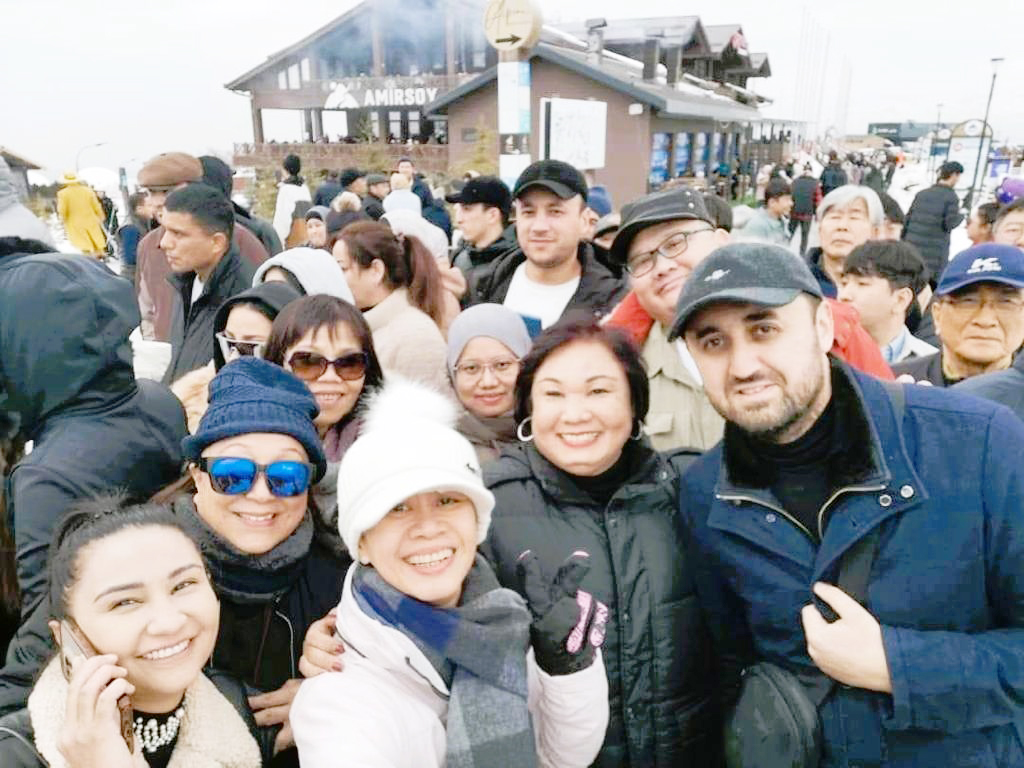
Exploring snow-covered Amirsoy.
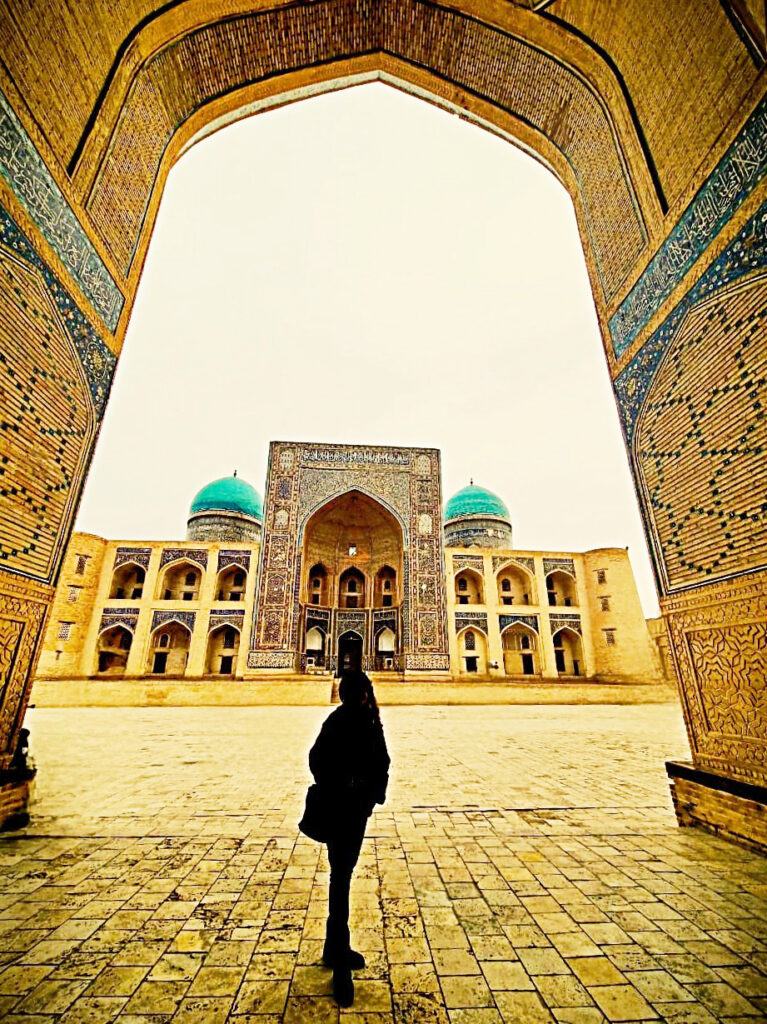
Lily admiring the turquoise-domed madrasah.