KOTA KINABALU: More than 400 participants took part in the first Autism Fun Run 2026 at the Universiti Malaysia Sabah (UMS) stadium on Sunday, showing strong community support for autism awareness and fundraising efforts.
The event brought together 83 persons with disabilities, 100 caregivers and 60 volunteers including 37 walk-in participants from families, the public and support groups, in conjunction with World Autism Awareness Month in April.
The run was jointly organised by the Sabah Social Welfare Services Department (JPKA), Sabah Autism Centre (PAUS) and the Board of Visitors of the Sembulan Special Needs Education Centre (TDKKU), in collaboration with the UMS Faculty of Medicine and Health Sciences.
Women, Health and People’s Wellbeing Minister Datuk Julita Majungki, who flagged off the run, said the programme also aimed to raise funds to equip a sensory room at PAUS, which is expected to benefit about 65 children.
She said such initiatives encourage community participation while supporting facilities that enhance the development and wellbeing of children with autism.
The sensory room will serve as a therapeutic space designed to stimulate or calm the senses, including sight, touch and hearing, to help improve focus and emotional regulation.
Equipment to be installed includes bubble tubes, textured wall panels, fibre optic lighting systems, as well as sensory integration tools such as swings and soft play equipment.
The event also featured supporting activities, including health screenings, awareness talks and interactive sensory sessions conducted with the involvement of faculty representatives.
Julita said programmes of this nature help improve public understanding of autism, particularly among families with limited access to information and support services, especially in rural areas.
According to JPKA statistics, Sabah has about 7,057 children with autism but only 18 special education centres and facilities, highlighting the need to expand access to early intervention and support services.
She said more autism centres and specialised facilities are needed to ensure children receive appropriate care and continuous developmental support. – Wu Vuide
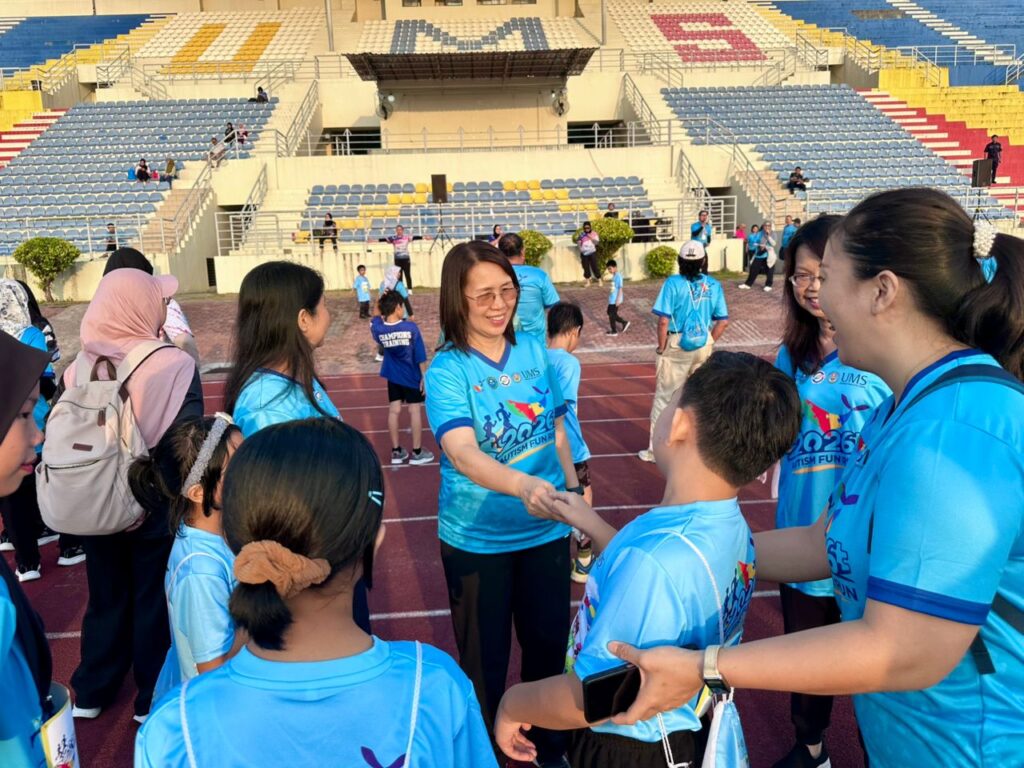
Julita greeting one of the participants.