By WU VUIDE
KOTA KINABALU: Indonesian Consul General in Kota Kinabalu, Noorman Effendi, said marriage registration is not merely an administrative process but an important effort by the state to build strong Indonesian families.
“The service we are providing today is not simply about registering a marriage. More importantly, we are ensuring that every Indonesian family receives legal recognition, state protection and a strong foundation for the future of their children,” he said.
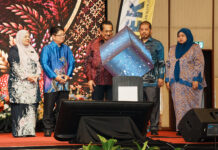
He said this during the launch of the marriage for protection (Menikum) programme 2.0 organised by the Consulate General here from June 30 to July 3.
Noorman said most Indonesians within the consulate’s jurisdiction live in plantation areas with limited access to transport and financial resources.
As such, he said integrated programmes provide a practical solution to bring government services closer to the community while expanding access to fundamental civil rights.
Senior Adviser to the Indonesian Minister of Foreign Affairs for Inter-Institutional Relations, Prasetya Hadi, highlighted the importance of inter-ministerial and inter-agency collaboration in delivering more inclusive public services to Indonesians living overseas.
“The programme demonstrates that collaboration between ministries can bring government services closer to the people.
“Through strong synergy, we are not only issuing administrative documents, but also ensuring that the civil rights of Indonesian citizens are fulfilled as part of the state’s responsibility to protect all Indonesians, wherever they may be,” he said.
The three-day programme will see 71 Indonesian couples in Sabah obtaining legal recognition for their families.
The programme reflects the Indonesian Government’s commitment to ensuring that every Indonesian family living abroad receives legal recognition, protection of their civil rights and improved access to government services.
For many Indonesians working on plantations in Sabah, a legally recognised marriage certificate provides an important foundation for protecting the family, ensuring legal certainty for husbands, wives and children, and facilitating access to a range of government services, including birth registration, civil administration, education and healthcare.
In addition, the participants also received integrated civil administration services, including updates to population records, the issuance of a single identification number, changes to marital status records, and birth registration certificates for their children.
The integrated services enable families to complete multiple essential administrative processes in a single programme, providing greater convenience, legal certainty and efficiency.
The programme is a public service initiative first introduced by the Consulate General in 2011.

Noorman (centre), during the launch of the Menikum programme 2.0.