By WU VUIDE
PUTRAJAYA: The Federal Government must use Budget 2027 as the starting point to correct the long-standing disparity in development between Peninsular Malaysia and Sabah and Sarawak, said Datuk Seri Dr Jeffrey Kitingan.
For decades, federal development allocations have remained heavily Malaya-centric, with about 86 to 87 per cent allocated to Peninsular Malaysia while Sabah and Sarawak together receive only 12 to 13 per cent annually, said the Parti Solidariti Tanah Airku (Star) president.
This allocation formula does not reflect the vast geographical size, infrastructure needs, development backlog and economic potential of Sabah and Sarawak, he said.
Sabah and Sarawak were persuaded to form Malaysia on the promise that both would be developed on par with Peninsular Malaysia, he reminded.
That promise has failed to materialise and Sabah is now probably 30 to 40 years behind Peninsular Malaysia in development, he said.
The Federal Government cannot continue treating Sabah and Sarawak as merely one unit each, compared to Peninsular Malaysia with 11 states as 11 units, he said.
Such an approach ignores the special constitutional position of the Borneo States and the circumstances under which Malaysia was formed in 1963, he said.
Sabah used to have five residencies and some 30 districts and sub-districts, some of which are larger than states in Peninsular Malaysia, he pointed out.
For example, the Keningau parliamentary constituency is larger than Penang, Melaka and Perlis combined, he said.
Sabah remains the poorest state in Malaysia, with eight of the country’s 10 poorest districts located in the state, he said.
Sabah’s gross domestic product per capita is less than half the national average, with little done to uplift rural poverty and many people still relying on untreated, gravity-fed water and lacking basic amenities, he said.
These realities demonstrate that the existing development allocation formula has failed to close the regional development gap, he said.
Sabah and Sarawak must receive a fairer and more equitable share of federal development funds from Budget 2027 onwards, he said.
The allocations must correspond with geographical size, population, development needs, infrastructure deficit and contributions to the national economy, he said.
This is necessary to enable both Borneo States to develop according to their true potential and catch up with the more advanced states in Peninsular Malaysia, he said.
As one alternative, he proposed that Sabah’s constitutional entitlement of 40 per cent of net revenue derived by the Federal Government from Sabah be calculated and paid from 2026 onwards.
As for the entitlement for the “lost years” from 1974 to 2021, it can be discussed and negotiated separately between the Federal and Sabah Governments, he said.
Prime Minister Datuk Seri Anwar Ibrahim now has a golden opportunity to demonstrate the political will and leadership needed to make the payment of Sabah’s 40 per cent entitlement a reality, he said.
Materialising this payment would not only fulfil a constitutional obligation but also provide Sabah with the financial resources needed to improve infrastructure, eradicate poverty, stimulate growth and uplift the well-being of its people, he said.
At the same time, Sabah will contribute substantially to the national economy, he said.
The immediate priority must be to stop the continuing accumulation of unpaid entitlements and establish a clear and transparent mechanism for the proper calculation and payment of Sabah’s 40 per cent entitlement moving forward, he said.
Budget 2027 must not repeat the allocation patterns of the past, he said.
It should mark the beginning of a fairer federal development policy that recognises Sabah and Sarawak as equal partners and enables both regions to enjoy development comparable with Peninsular Malaysia, he said.
Correcting this regional imbalance is not merely a question of funding, but a matter of constitutional responsibility, fairness and the future stability and prosperity of Malaysia, he said.
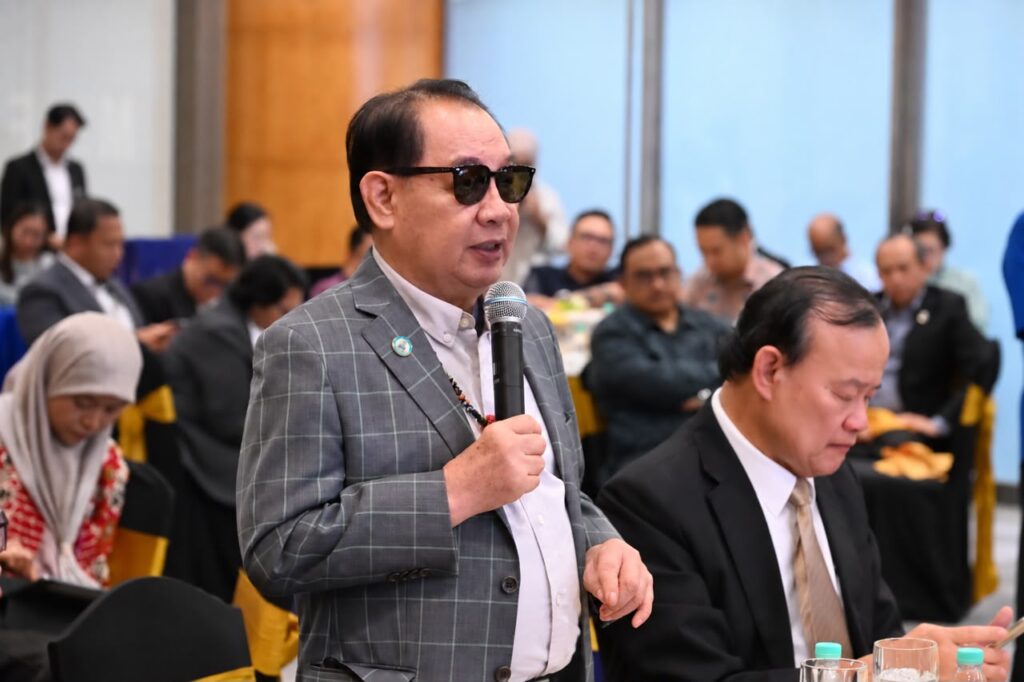
Jeffrey called the Federal Government to address the longstanding disparity.