By JAMES LEONG
SANDAKAN: Sandakan is not yet a finished success story, but for the first time in years, it feels like a town advancing rather than retreating. Once a vibrant harbour city dubbed “Little Hong Kong,” it endured decades of gradual decay—vacant shoplots, aging infrastructure, and persistent neglect.
That tide is turning. Since assuming office in February 2025, Majlis Perbandaran Sandakan (MPS) President Datuk Walter Kenson has instilled a tangible sense of direction, shifting the narrative from maintenance to meaningful renewal through sharper municipal efficiency, faster licensing, and a heightened focus on urban aesthetics.
Urban decline normalises neglect—clogged drains, broken lights, and empty premises become accepted. Walter’s administration has actively disrupted this mindset, intensifying landscaping, cleanliness, and back-lane restoration. Crucially, the economics of vacancy are being confronted. The August 2026 MPS Town Hall openly addressed rental sustainability, urging property owners to prioritise occupancy over inflated expectations. An occupied shop at a realistic rate generates infinitely more value for the town’s ecosystem than a vacant one holding out for a premium, and this pragmatic realism is beginning to reshape commercial attitudes.
Welcoming this pragmatic pivot, Dr. Ganesan Kumarasamy, Honorary Secretary of the Sabah Indian Chamber of Commerce, stated: “The renewed momentum in Sandakan’s municipal administration is precisely the signal the business community has been waiting for. We are particularly encouraged by the open dialogue on rental sustainability and the commitment to streamlining licensing approvals—these are practical measures that directly affect our members’ ability to invest, hire, and grow. If MPS continues this consultative approach, we will see a genuine revival of commercial activity in the old town.” His remarks underscore that bureaucratic reform is not a courtesy but a catalyst for sustainable economic activity.
Beyond dialogue, the push for procedural predictability remains a quiet but decisive priority. Businesses remember how their time is treated; every unnecessary delay or opaque requirement risks sending investment elsewhere. Sandakan must consistently signal that it welcomes legitimate commerce. Early indicators suggest MPS is treating responsible enterprises as development partners rather than administrative inconveniences—a cultural shift that could ultimately prove more influential than any single infrastructure project in restoring the town’s competitive edge.
Practical hurdles like daytime parking congestion and the town’s silence after dark are receiving overdue attention, with new management systems and night-market concepts under consideration. However, lasting vibrancy depends on identity. Sandakan’s heritage, exemplified by the Malaysia Book of Records-recognised Historical Tree Trail, demonstrates that its authentic story—collaboratively promoted by MPS, volunteers, and tourism stakeholders—can be a powerful economic anchor. Nostalgia for “Little Hong Kong” must translate into modern, visitor-ready experiences that keep people in town long after sunset.
Renewal, however, is bigger than one man. Walter’s energy requires the political will and financial muscle of the GRS-led Sabah Government and the Chief Minister’s broader development agenda, alongside the vital bridging roles played by elected representatives at parliamentary and State Assembly levels. As Dr. Ganesan further noted: “No single agency or individual can revive a town. It takes coordinated effort—State support, municipal execution, and private-sector risk-taking. The early signs are promising, and we are cautiously optimistic.” This tripartite cooperation between government, municipal authorities, and commerce is the bedrock upon which lasting change must be built.
Honest appraisal demands acknowledgment that significant challenges persist. Public transport remains inadequate, drainage requires engineered solutions, the waterfront is underutilised, and complex social issues cannot be swept aside. These are not failures but the next frontier of governance. Progress must never become an excuse for complacency; sustainable growth requires tackling these structural weaknesses with the same vigour applied to landscaping and licensing, ensuring that no neighbourhood is left behind in the town’s forward march.
Sandakan is not fully transformed, but it has decisively stopped standing still. The most profound shift is psychological—a restoration of confidence that sparks conversation about possibilities rather than just past glories. If municipal leadership, State backing, private enterprise, and the broader community continue aligning their efforts with consistency and transparency, Sandakan can offer its next generation a compelling reason to stay, build, and thrive. This time, the momentum must not be squandered.

Walter Kenson has instilled a tangible sense of direction.
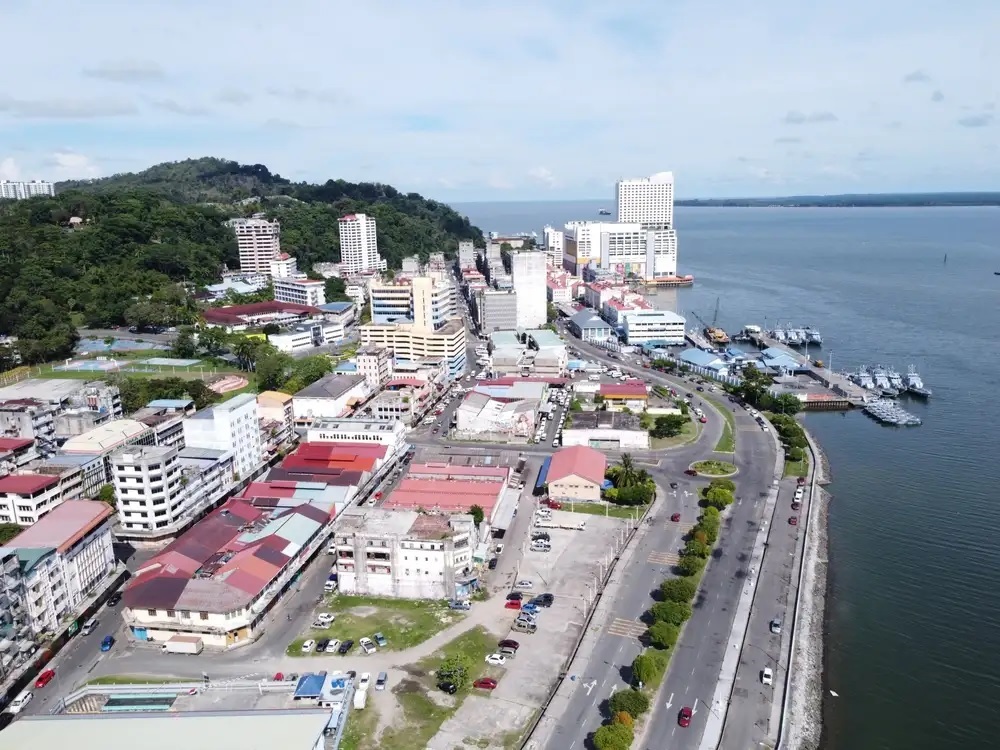
An aerial view of Sandakan town.